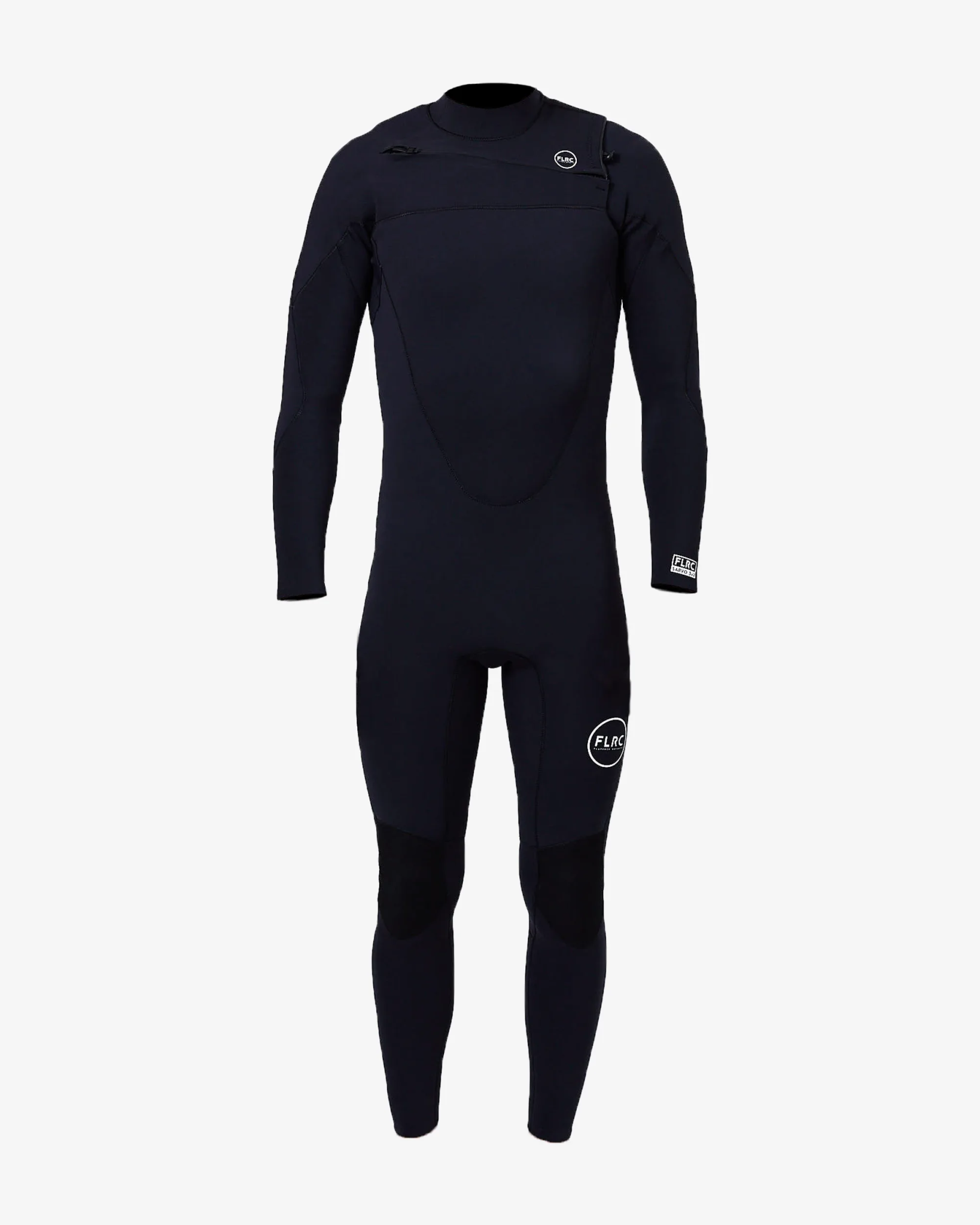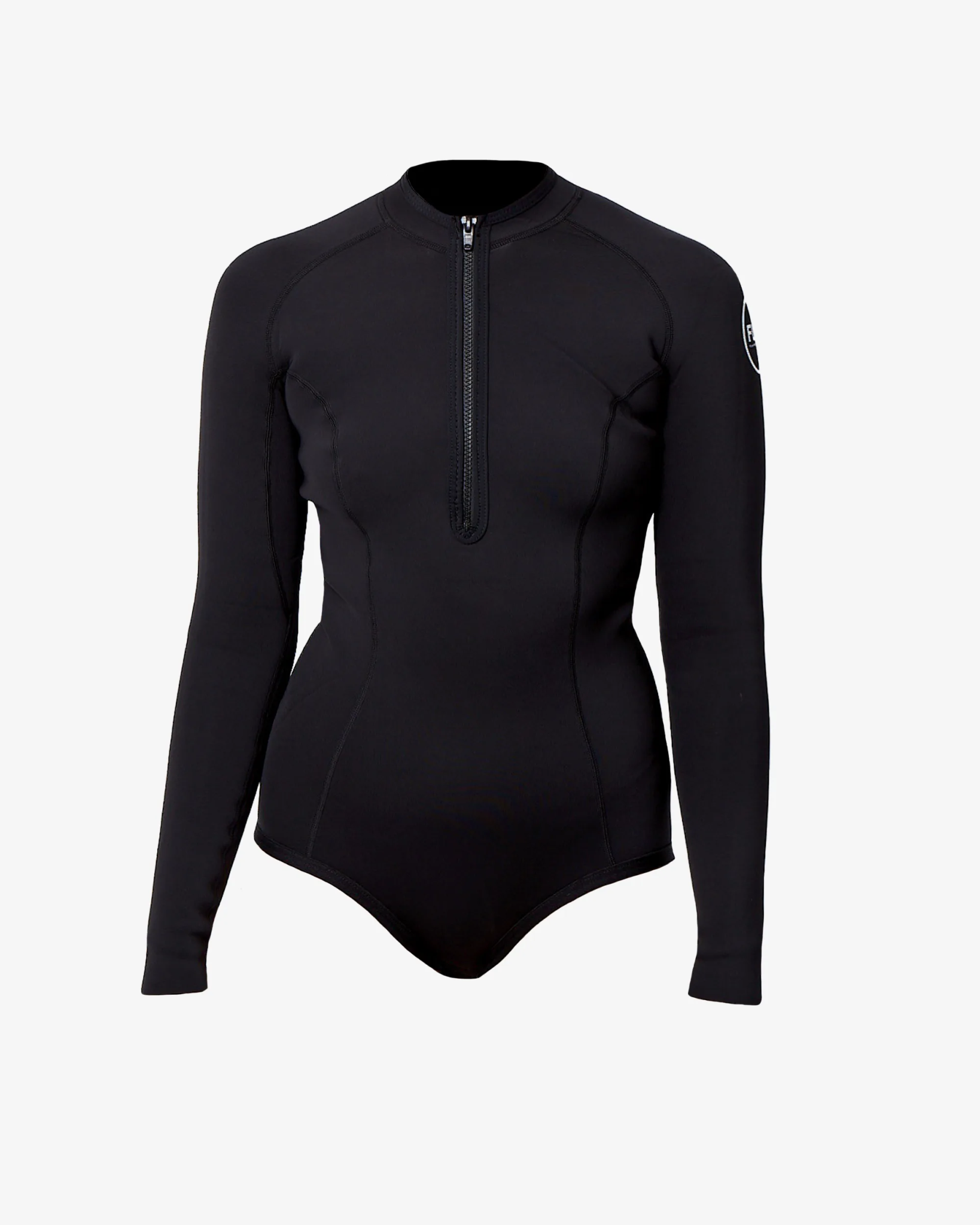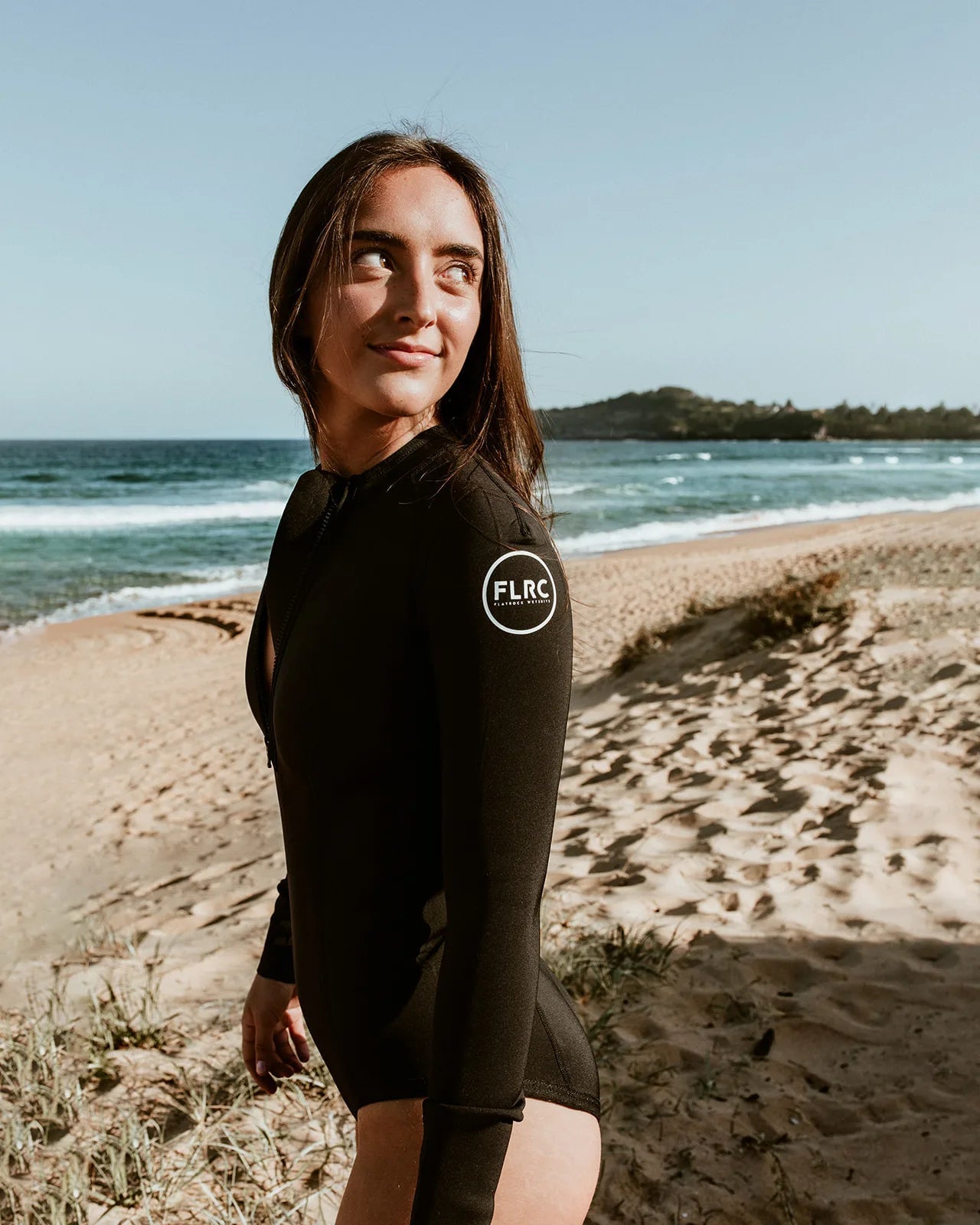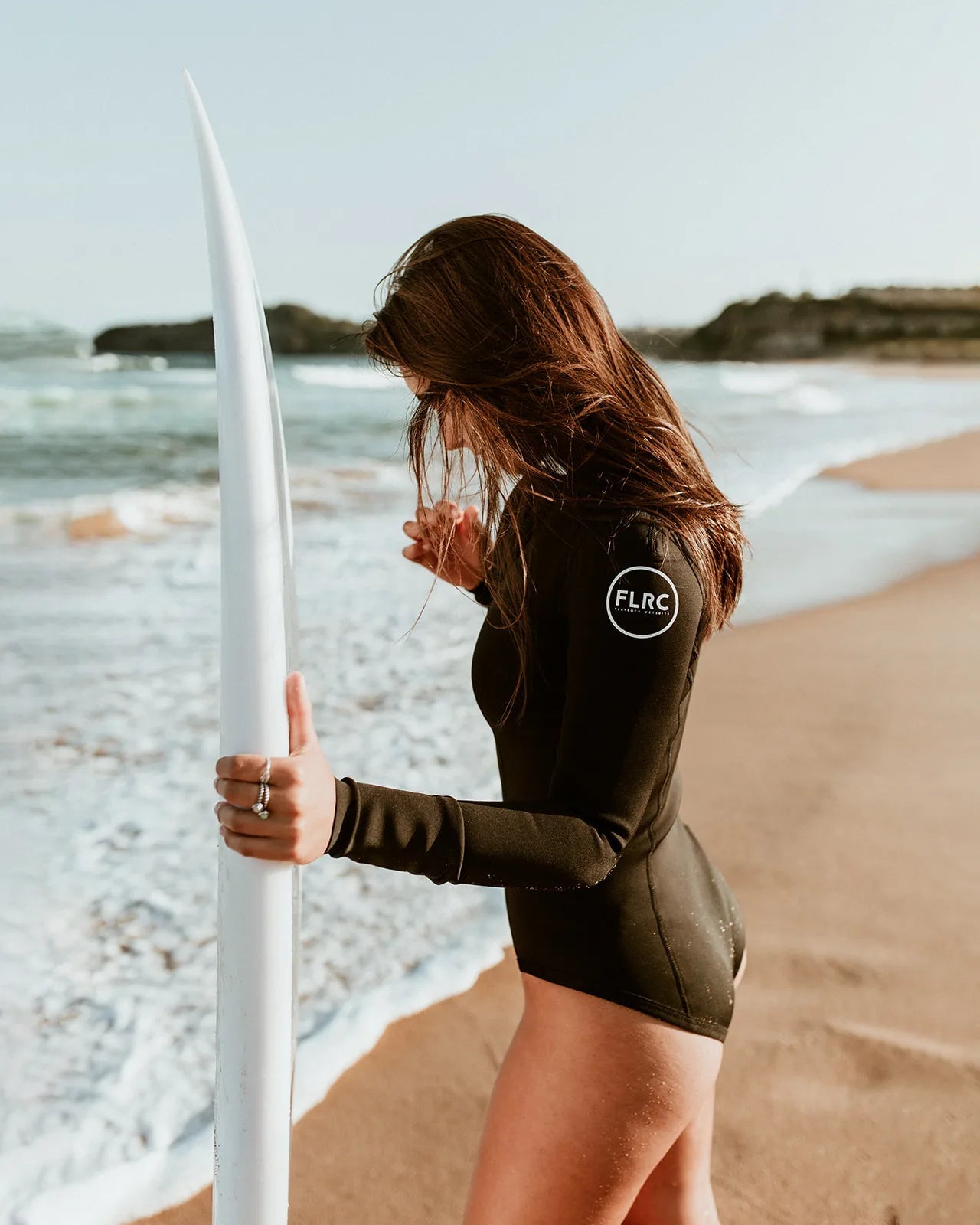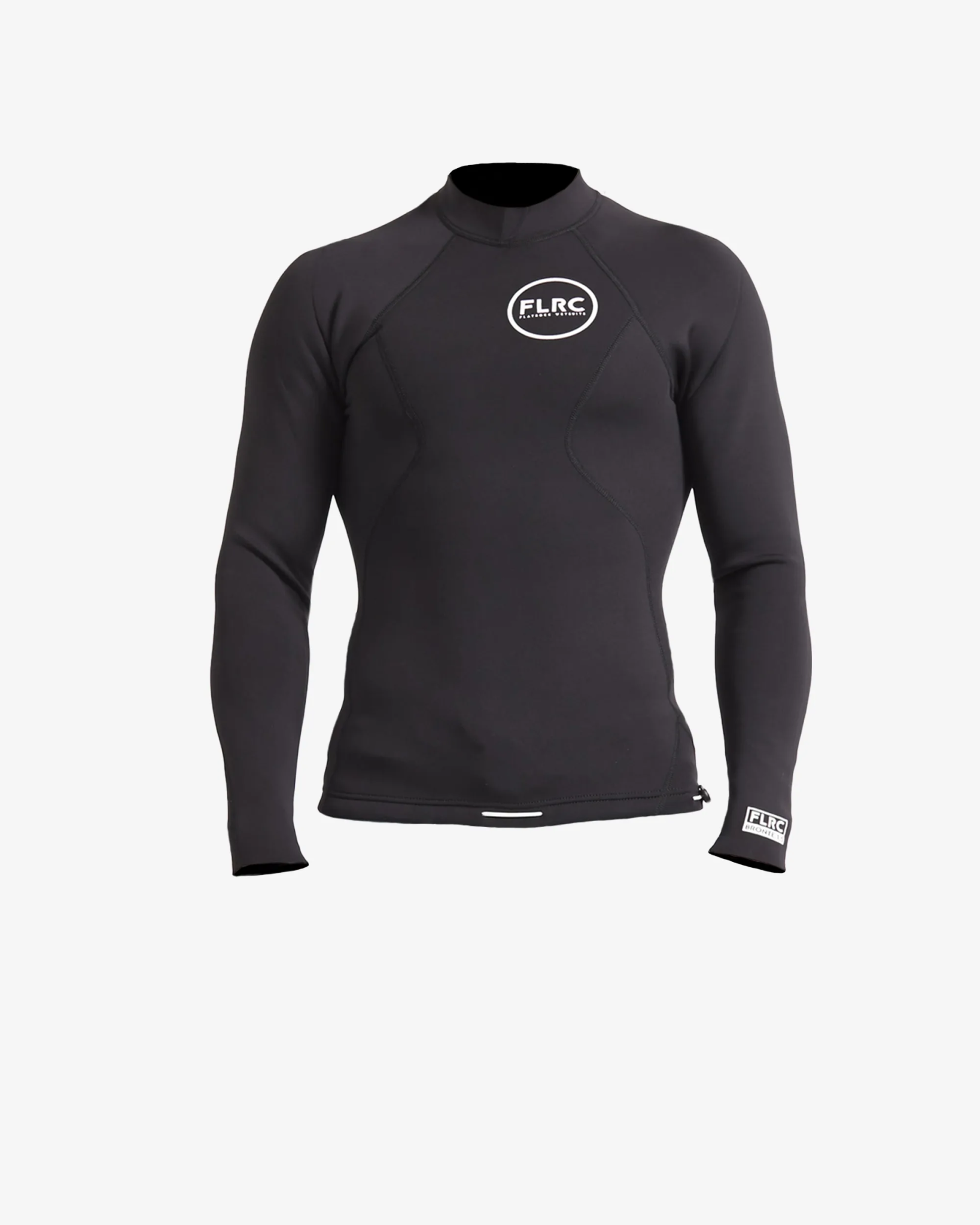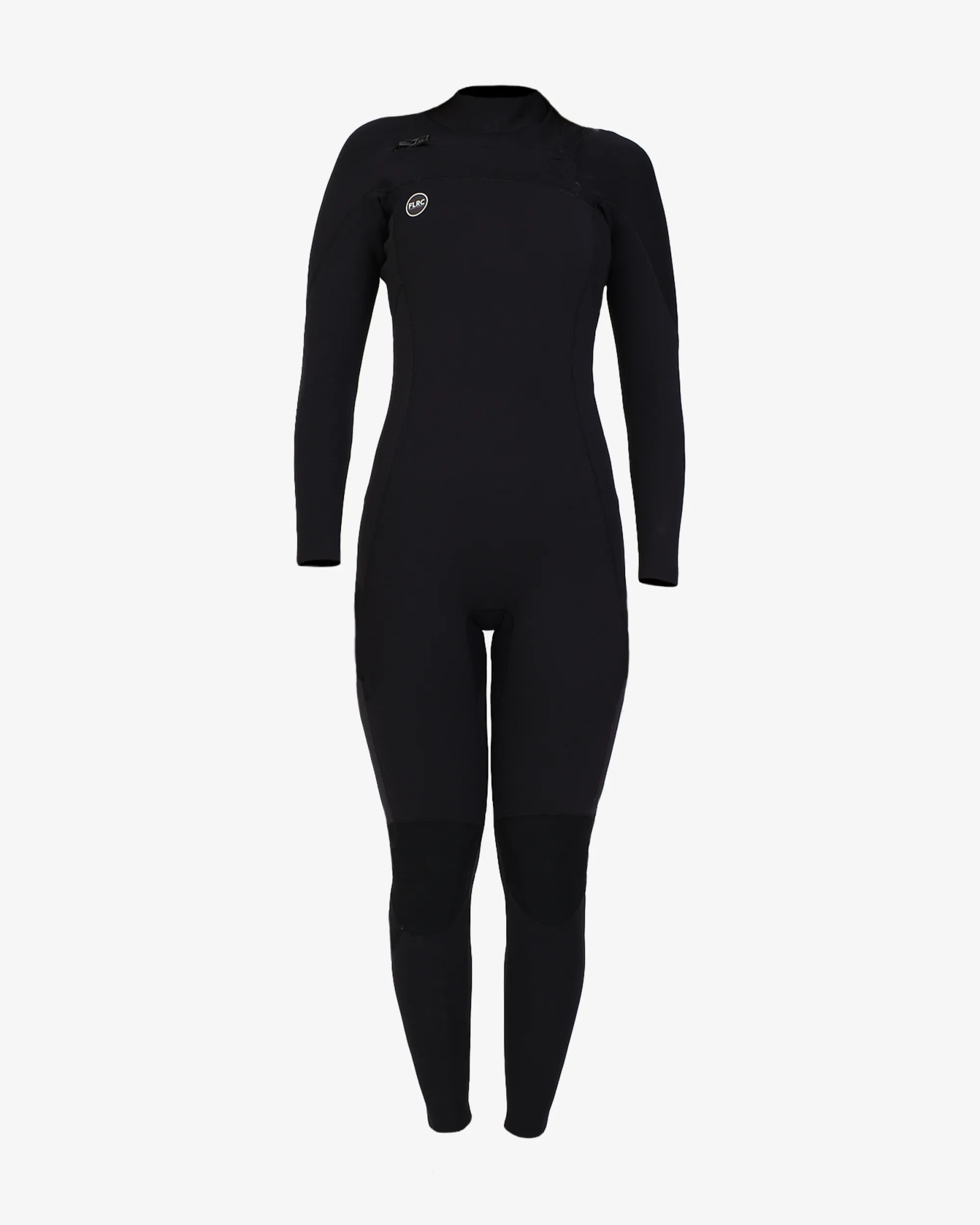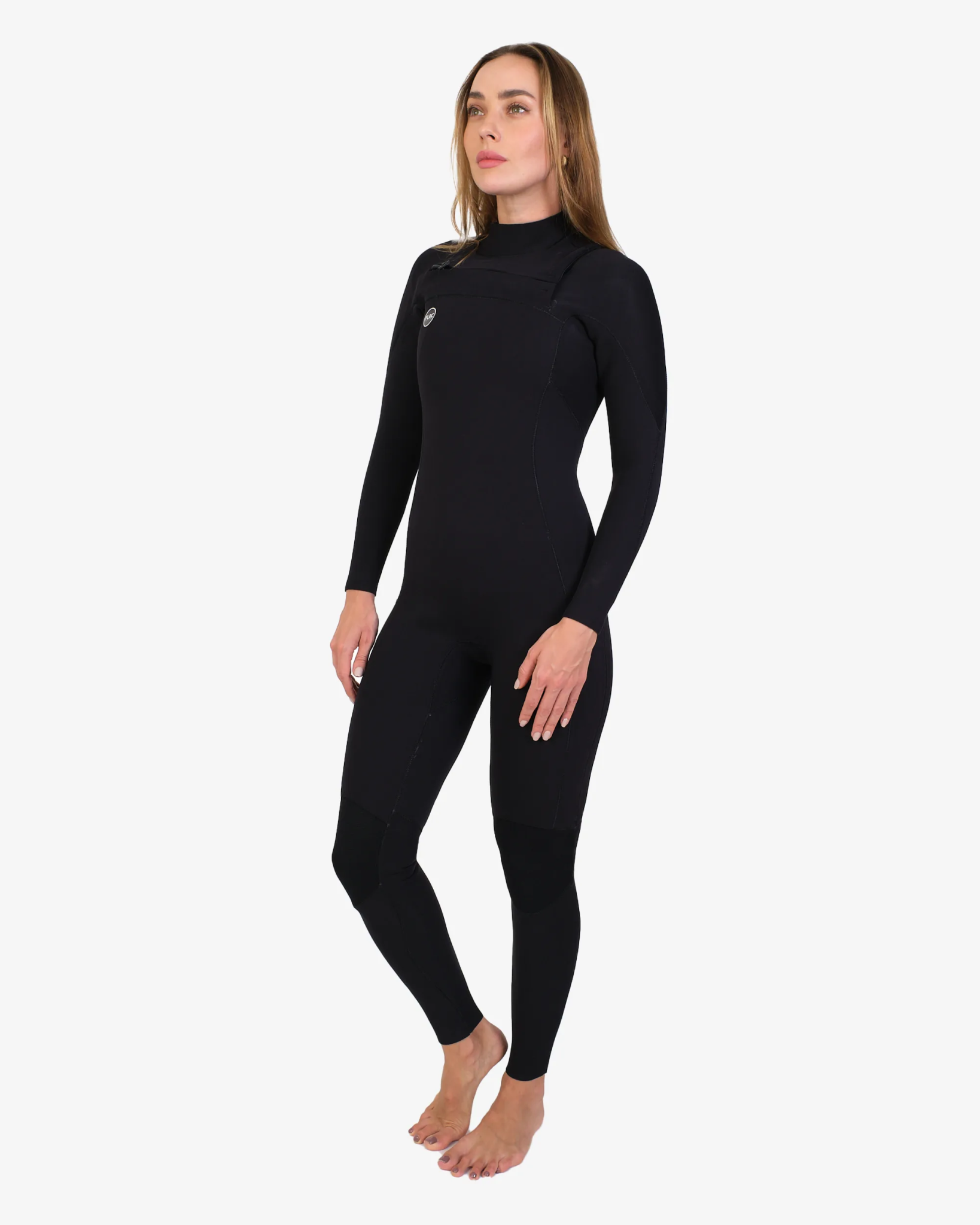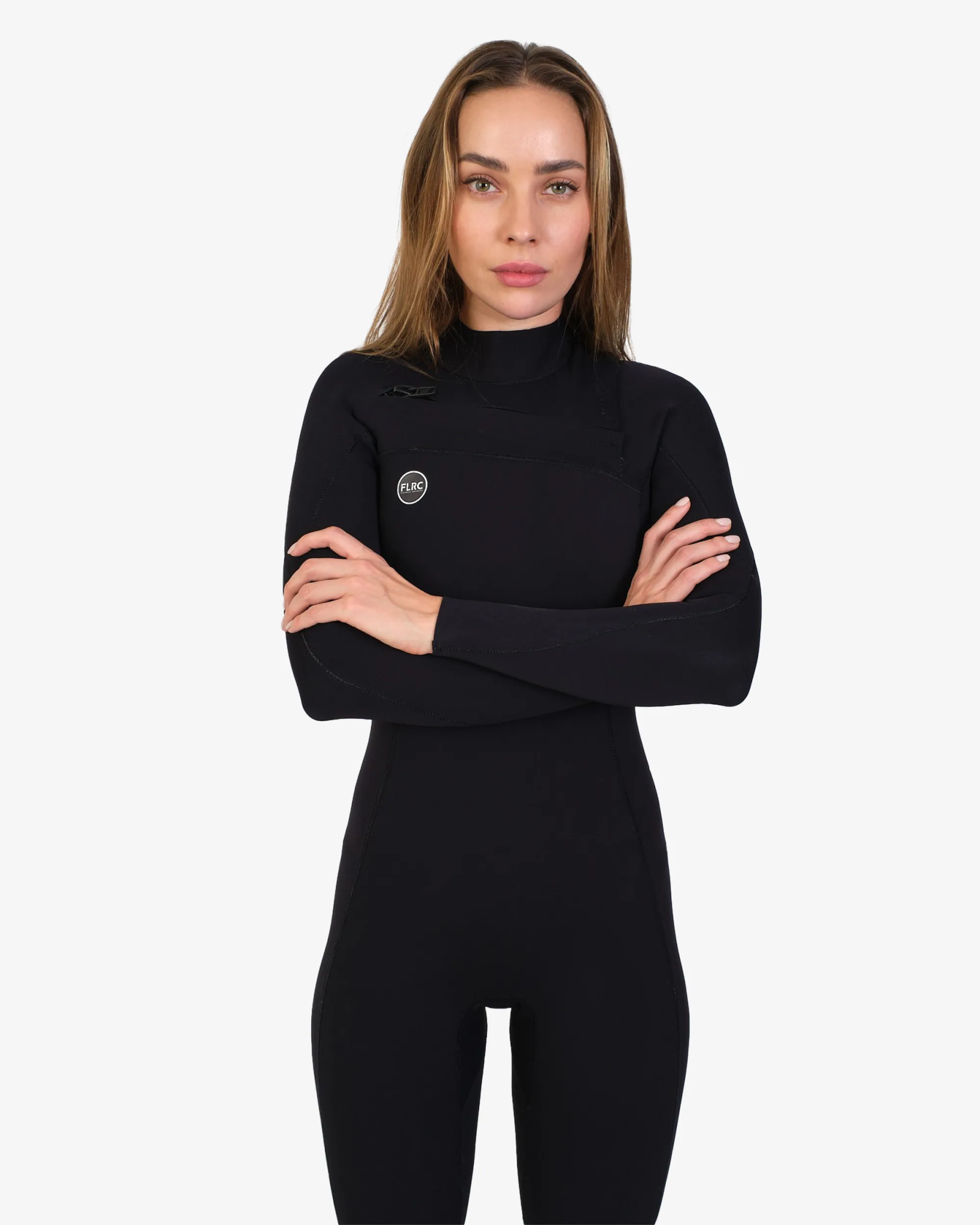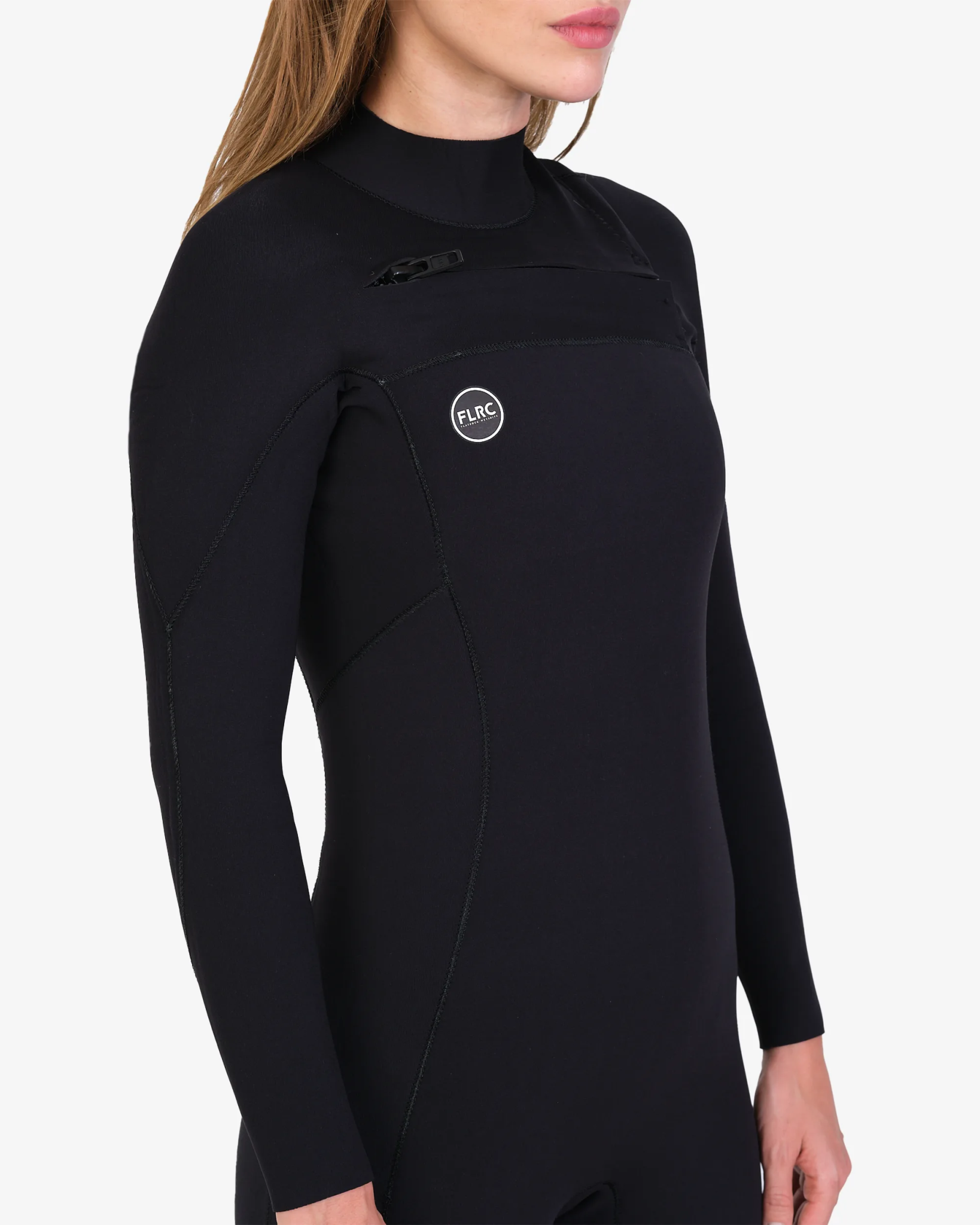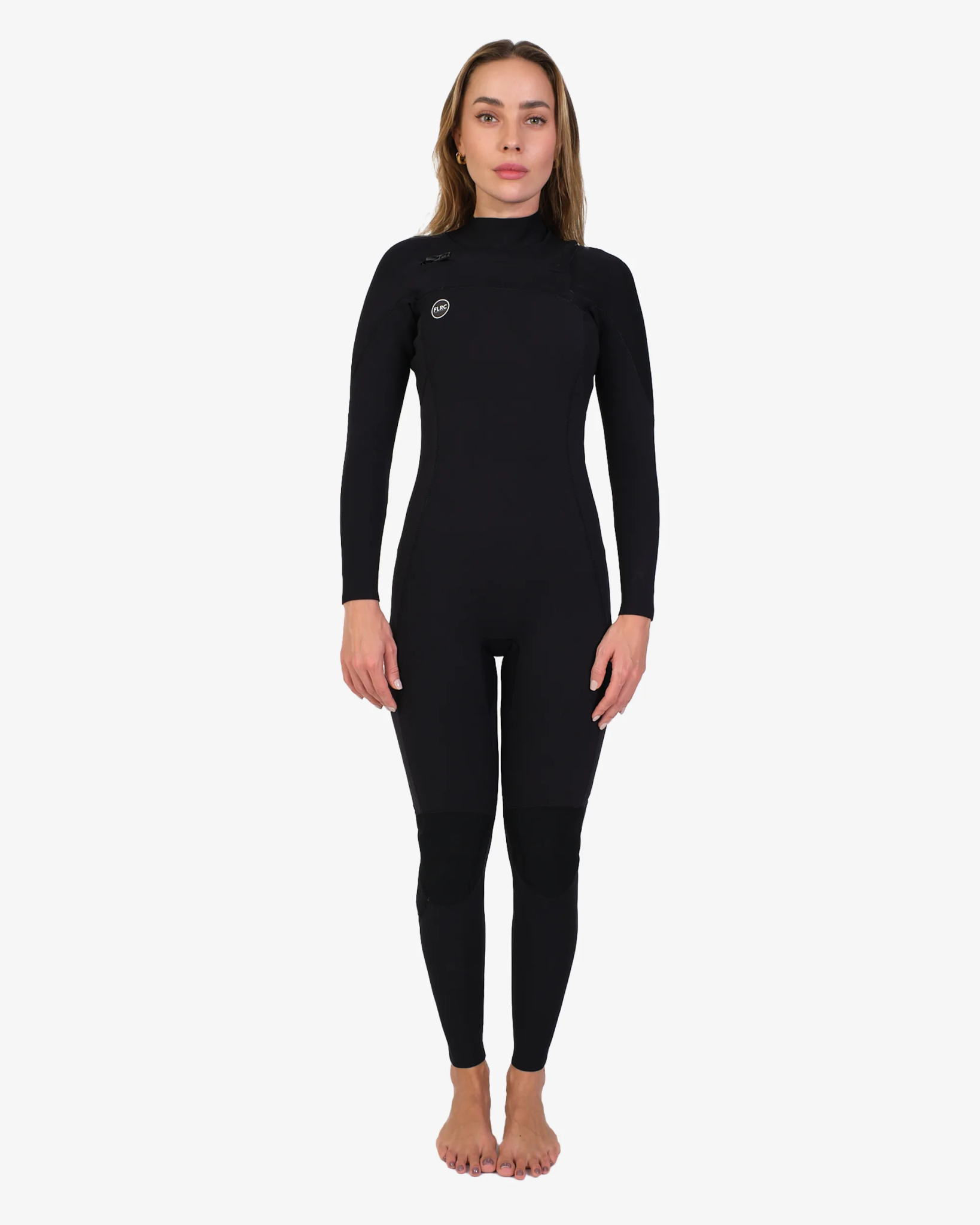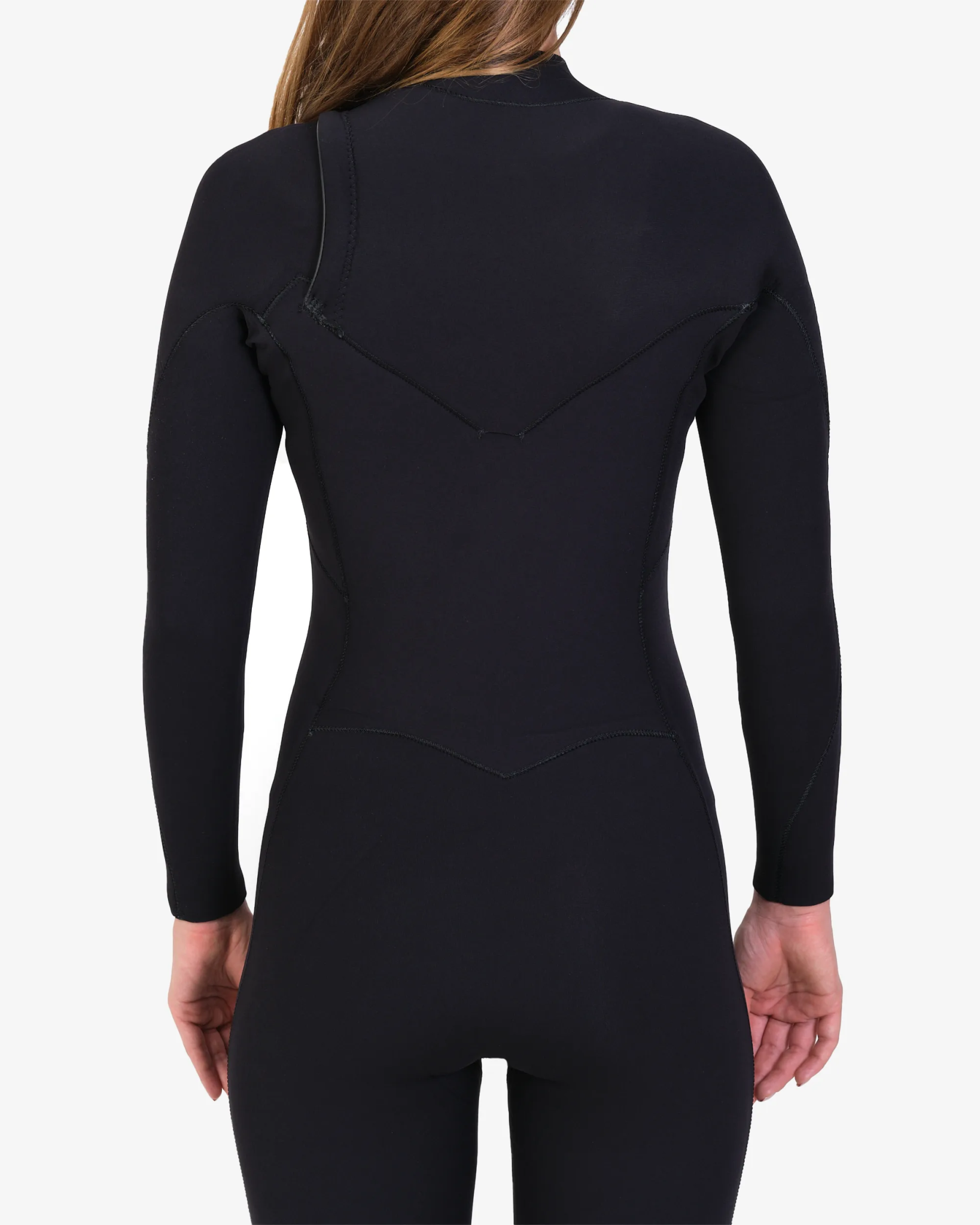


A wetsuit only counts as genuinely sustainable when three things line up: the neoprene comes from a lower-impact source (limestone-based or recycled, not virgin petroleum), the lining and dyeing process cuts down on water and chemical use, and the suit is built to last several seasons rather than one. At Flatrock Surf, we reckon the fastest way to cut through greenwashing is simple: stop reading the marketing copy and start reading the materials list. That's where the real trade-offs between eco credentials, warmth and durability show up.
Why is there no single definition of a sustainable wetsuit?
There's no legal standard for what makes a wetsuit eco-friendly, so brands are free to highlight whichever part of the process looks best. One suit might lead with recycled lining fabric while running standard petroleum neoprene underneath. Another might use limestone-based neoprene but dye it with a water-heavy process. Four things actually decide a suit's footprint: the base rubber, the fabric lining, the dyeing and finishing process, and how long it lasts before you need to replace it. If you're curious why any of this matters beyond the wetsuit itself, our piece on how climate change is affecting the ocean covers the bigger picture.
What's the difference between limestone-based and petroleum-based neoprene?
Both start life as chloroprene rubber, but the filler used to bulk that rubber out comes from different places. Traditional neoprene uses petroleum-derived carbon black as its filler. Limestone-based neoprene swaps that out for ground calcium carbonate sourced from limestone rock, which cuts reliance on crude oil as a raw input. Stretch, warmth and feel in the finished foam can end up very similar between the two, since the base polymer is the same family of synthetic rubber either way.
Petroleum-based neoprene
Best for: surfers prioritising cost and proven long-term consistency.
It's the industry default because it's well understood, cheap to produce at scale, and predictable in how it stretches and insulates over years of wear. The trade-off: it relies entirely on crude oil extraction, with no reduction in that reliance built into the material itself.
Limestone-based neoprene
Best for: surfers wanting a lower fossil-fuel footprint without changing how the suit performs in the water.
Because the base chemistry is nearly identical to petroleum neoprene, warmth and flex hold up well. It usually costs a bit more to produce, and swapping the filler doesn't get rid of the energy and chemical inputs needed to turn raw rubber into a finished wetsuit panel. So it's a genuine improvement, not a complete fix.
What is recycled neoprene actually made from?
Recycled or repurposed neoprene is built from offcuts: the scraps left on the cutting room floor when wetsuit panels get stamped out of larger sheets. Those offcuts are shredded, reprocessed and pressed back into usable foam sheet, sometimes blended with a portion of virgin neoprene to keep the final product consistent.
Recycled and repurposed neoprene offcuts
Best for: surfers who want to reduce manufacturing waste without a big jump in price.
This keeps material out of landfill, since cured neoprene doesn't break down in any useful timeframe. The trade-off is consistency: reprocessed foam can have slightly more variation in cell structure than virgin sheet. Manufacturers manage that by blending it with new material in the panels that need the most flex, like the underarms and knees.
Are plant-based rubber wetsuits warm enough for Australian surf?
Plant-based, or bio-based, rubber alternatives use natural rubber latex, often taken from a shrub called guayule, blended with synthetic rubber to get the stretch and durability surfers expect. On their own, natural rubbers don't insulate or flex the same way as full synthetic neoprene, so most plant-based suits on the market are hybrids rather than fully plant-derived.
Plant-based (bio-based) rubber blends
Best for: surfers in milder water who want to reduce the petroleum content of their suit and are comfortable with a newer material category.
Warmth-to-weight generally sits close to standard neoprene in current blends, though the natural rubber component can be a touch less flexible in the cold. That matters more for surfers in Victoria, South Australia and Tasmania, where water temps drop as low as 11°C, than it does further north. If you're not sure what thickness your local water calls for before you start comparing materials, our guide to wetsuit thickness for Australian conditions is the place to start.
Do water-saving dyeing processes and biodegradable linings make a real difference?
Dyeing and finishing the fabric that lines a wetsuit is a water-heavy step in traditional manufacturing. Some manufacturers now use solution-dyeing, where colour gets added to the fibre before it's spun rather than dyed afterwards in a separate bath. That cuts the amount of water and wastewater involved at this stage. On the lining side, recycled polyester (often reprocessed from post-consumer plastic bottles) is now common, and a smaller number of suits use linings built to break down faster at end of life. Biodegradable linings are still a young category, and they tend to sit in the middle ground on water absorption and dry time compared with standard synthetic plush. Check the specific fabric spec rather than assuming biodegradable automatically means warmer or faster drying.
What trade-offs should you actually expect from a sustainable wetsuit?
Cost is the most consistent trade-off. Limestone-based and recycled neoprene typically add to production cost, and that gets passed on at retail. Durability is roughly a wash: a well-built limestone or recycled-neoprene suit should last as long as a standard one, since stitching, taping and panel construction matter more for longevity than whatever filler sits in the rubber. Plant-based rubber is the category where warmth-to-weight is still catching up in the coldest water, which is why it suits milder regions better than a Tasmanian winter dawn patrol. The honest way to shop is to treat sustainability claims as one input alongside thickness, fit and construction quality, not a replacement for them. Our guide to what to look for in a wetsuit covers the fit and construction checks worth running before you commit to any suit, eco-rated or not.
Heading into winter 2026, limestone-based and recycled-neoprene options are becoming easier to find at mainstream price points, as those materials edge closer to standard neoprene on cost. If you want to compare current wetsuit options for your local water temperature, browse our featured range or check out our men's and women's wetsuit collections.
Frequently asked questions
Is limestone neoprene actually more sustainable than petroleum neoprene?
We treat limestone neoprene as a genuine improvement rather than a complete fix: it reduces reliance on crude oil as a raw filler input, but manufacturing the finished rubber still needs similar energy and chemical processing either way.
Does a sustainable wetsuit keep you as warm as a standard one?
Limestone-based and recycled neoprene perform very close to standard neoprene for warmth, since the base rubber chemistry is largely the same. Plant-based rubber blends can lag a touch in the coldest Australian waters, like Victoria, South Australia and Tasmania.
How long should a sustainable wetsuit last compared to a standard one?
Construction quality, not the type of neoprene, is the main factor in how many seasons a wetsuit lasts. A well-taped, well-stitched limestone or recycled-neoprene suit should last as long as an equivalent standard suit.
Are recycled neoprene wetsuits more expensive?
Recycled and limestone-based neoprene generally cost more to produce than standard petroleum neoprene, and that difference is usually reflected in the retail price.
What should I check first when a wetsuit is marketed as eco-friendly?
Look past the marketing language to the actual materials list: the base neoprene type, the lining fabric and the dyeing process are what actually determine whether a suit's sustainability claim means anything.