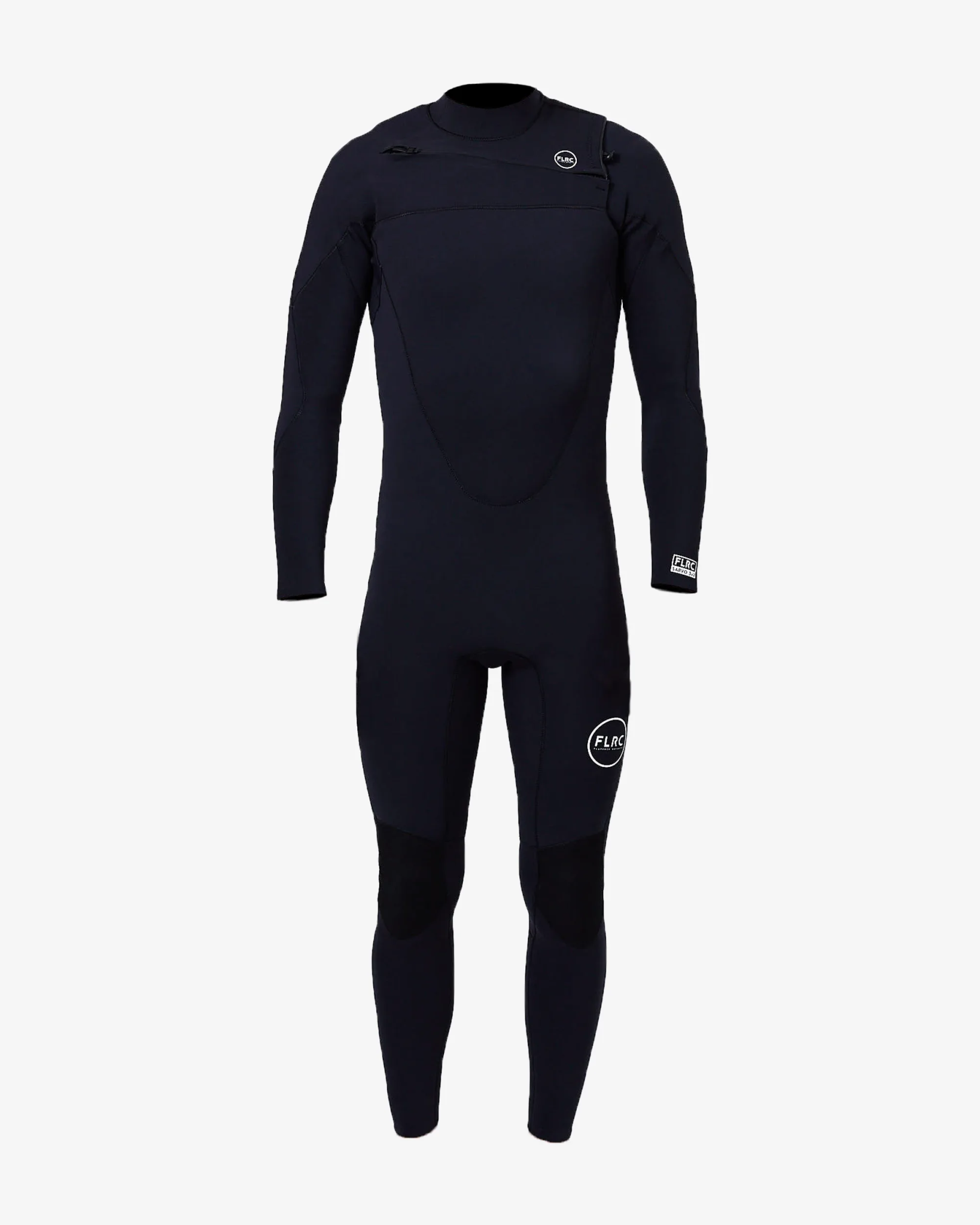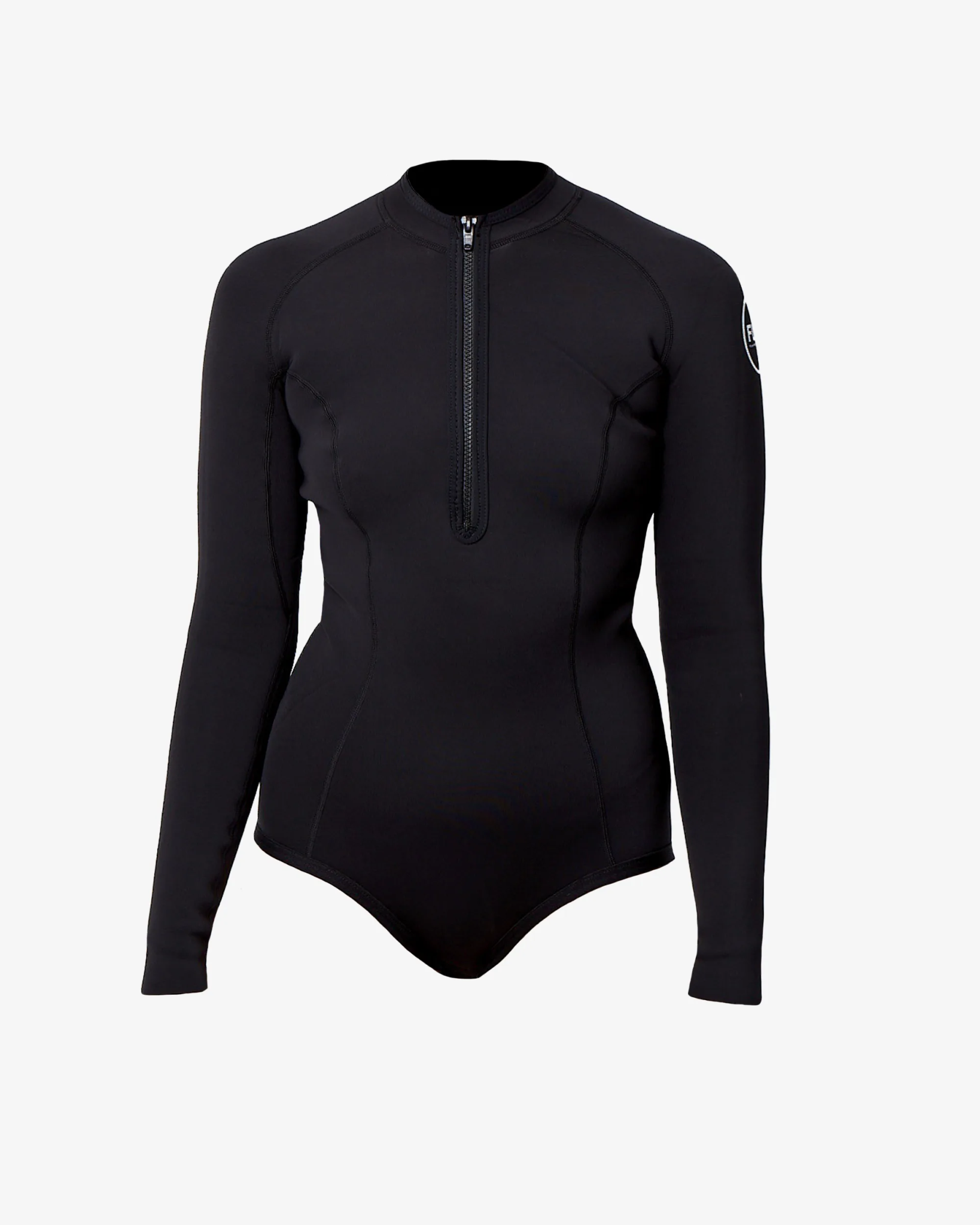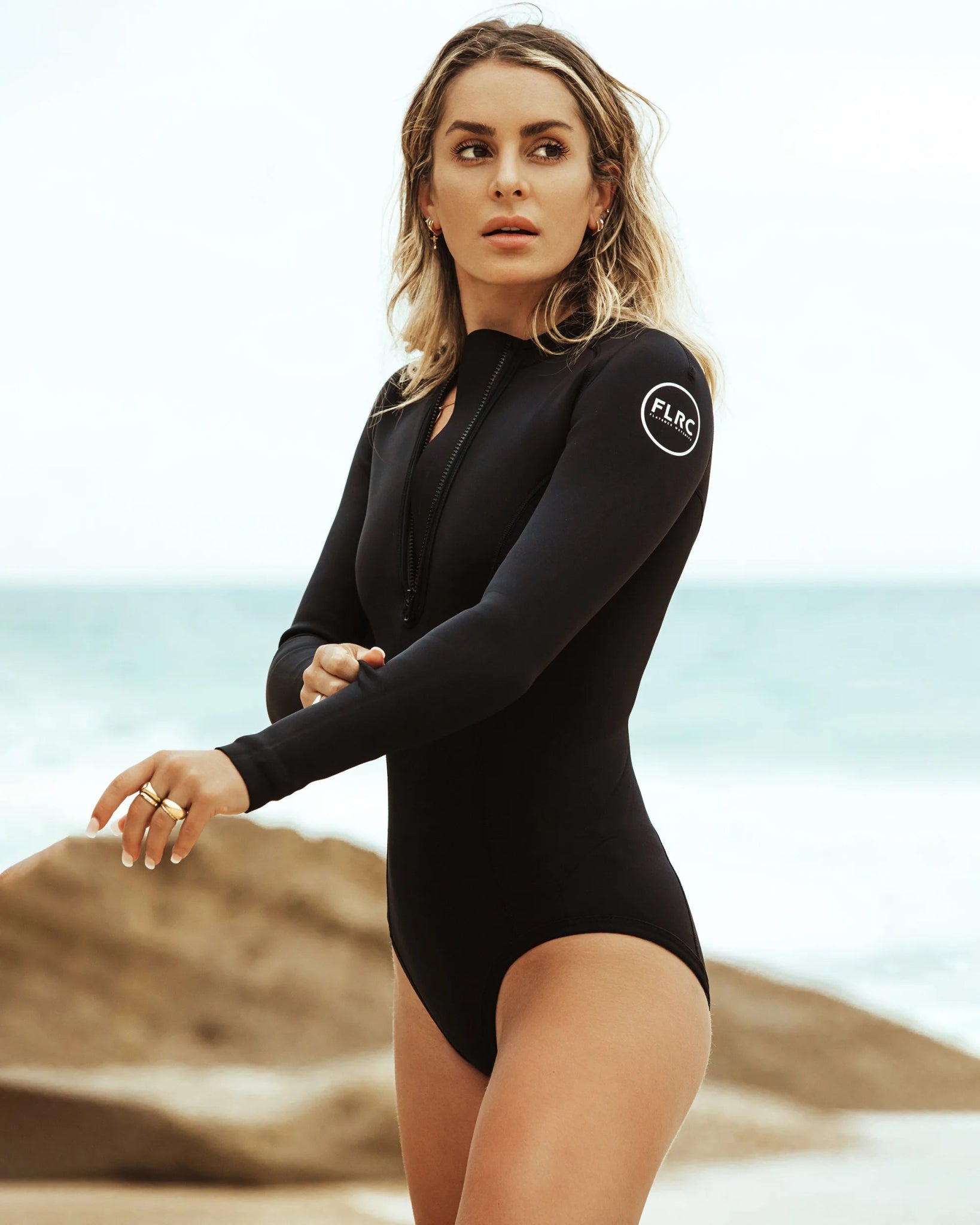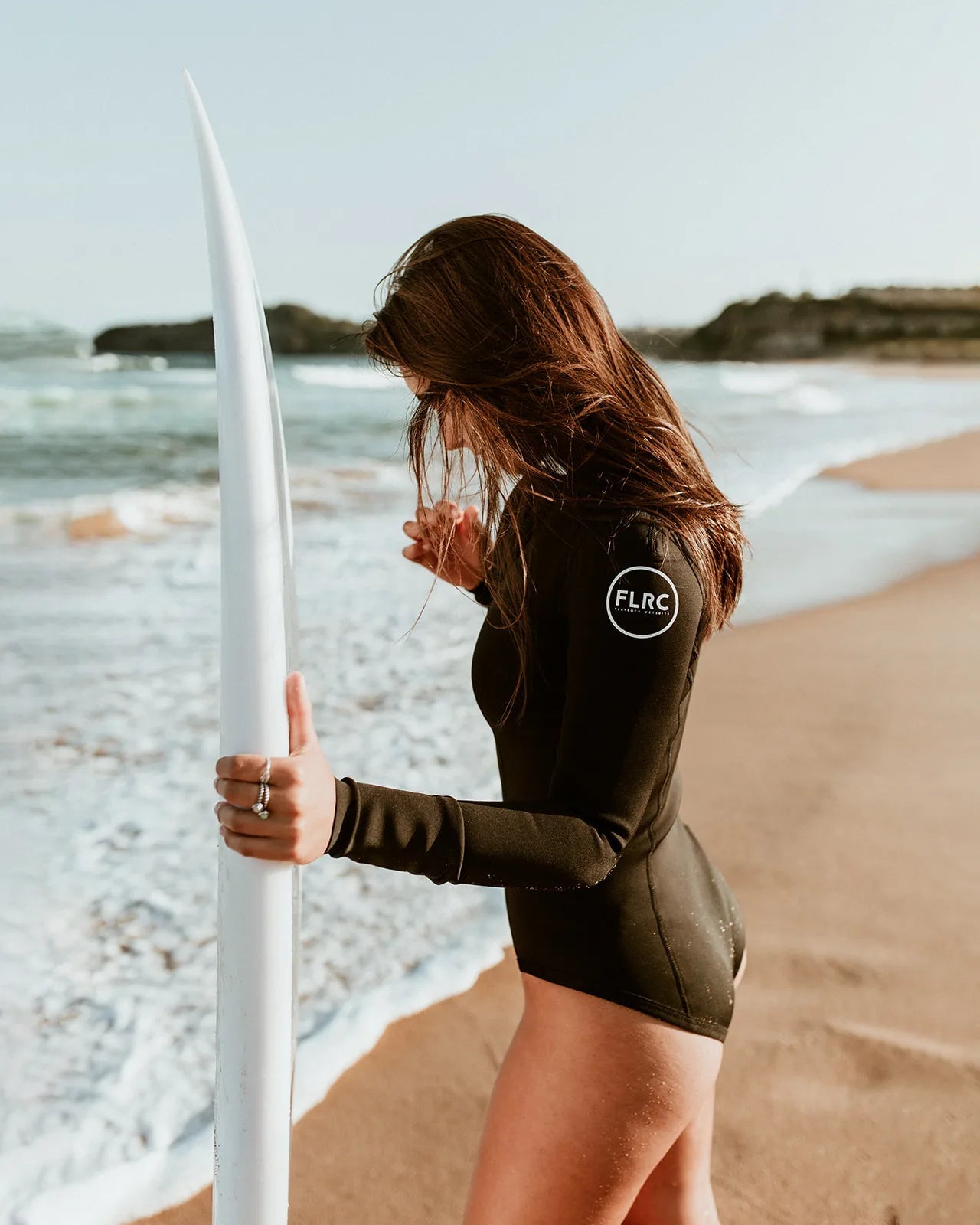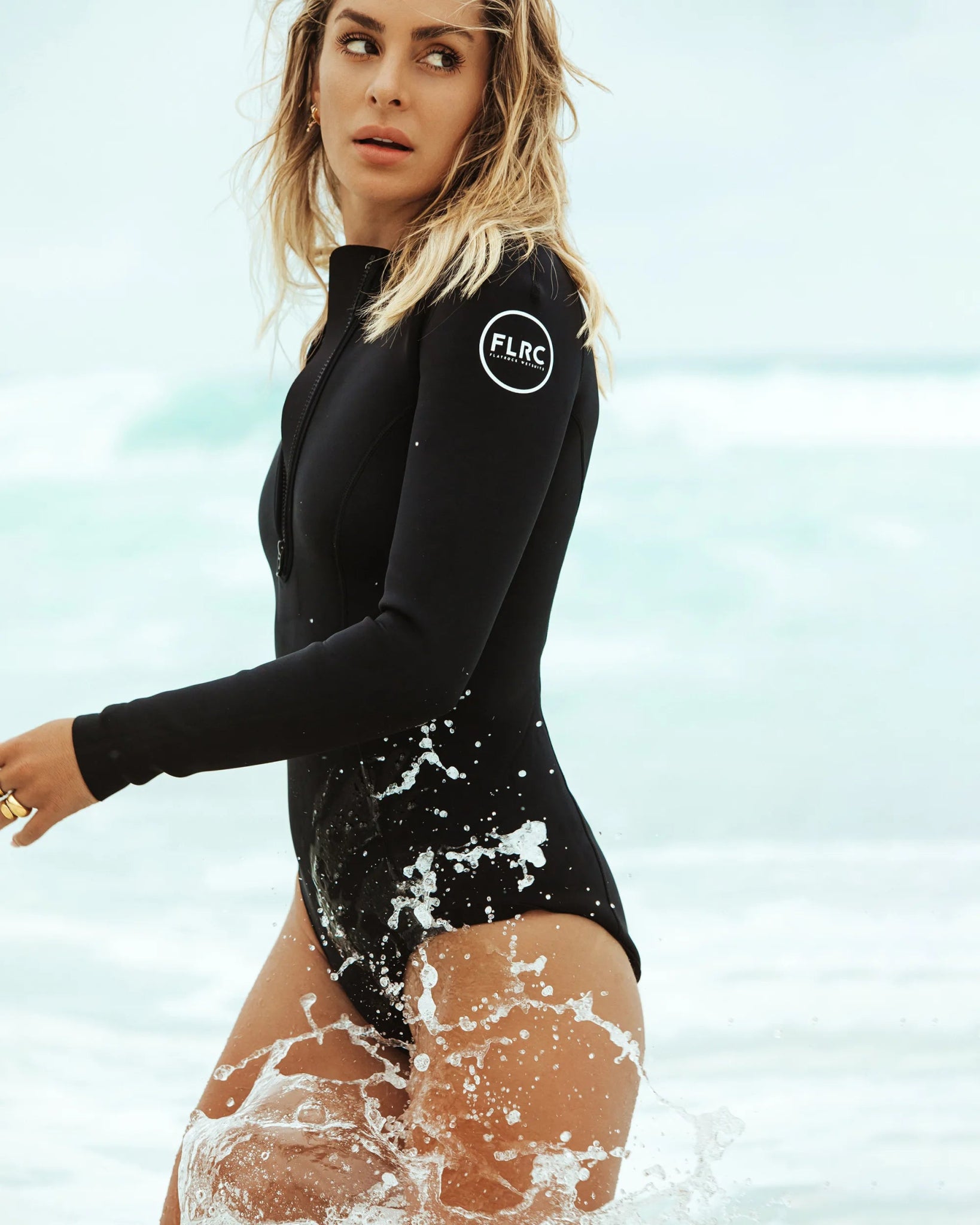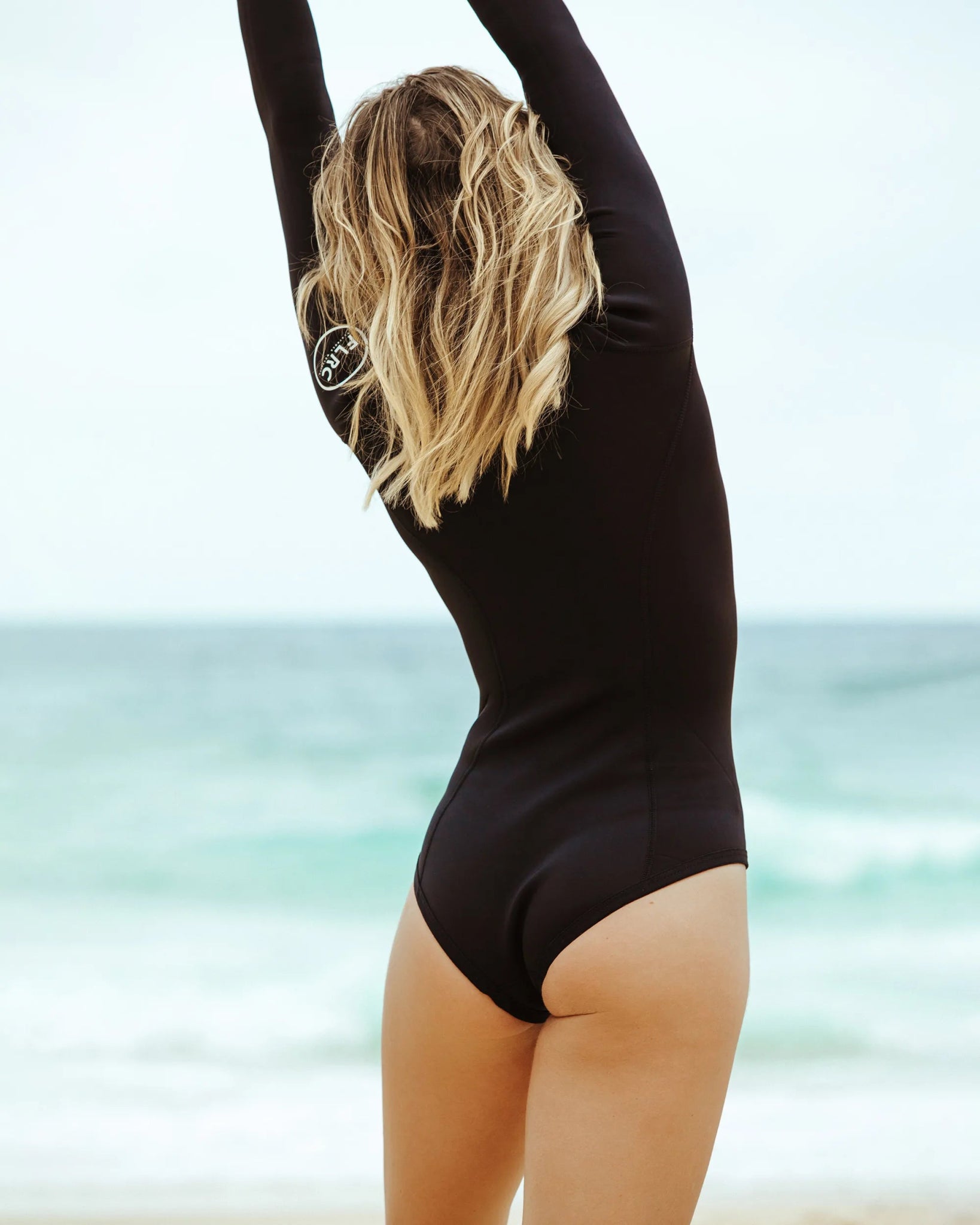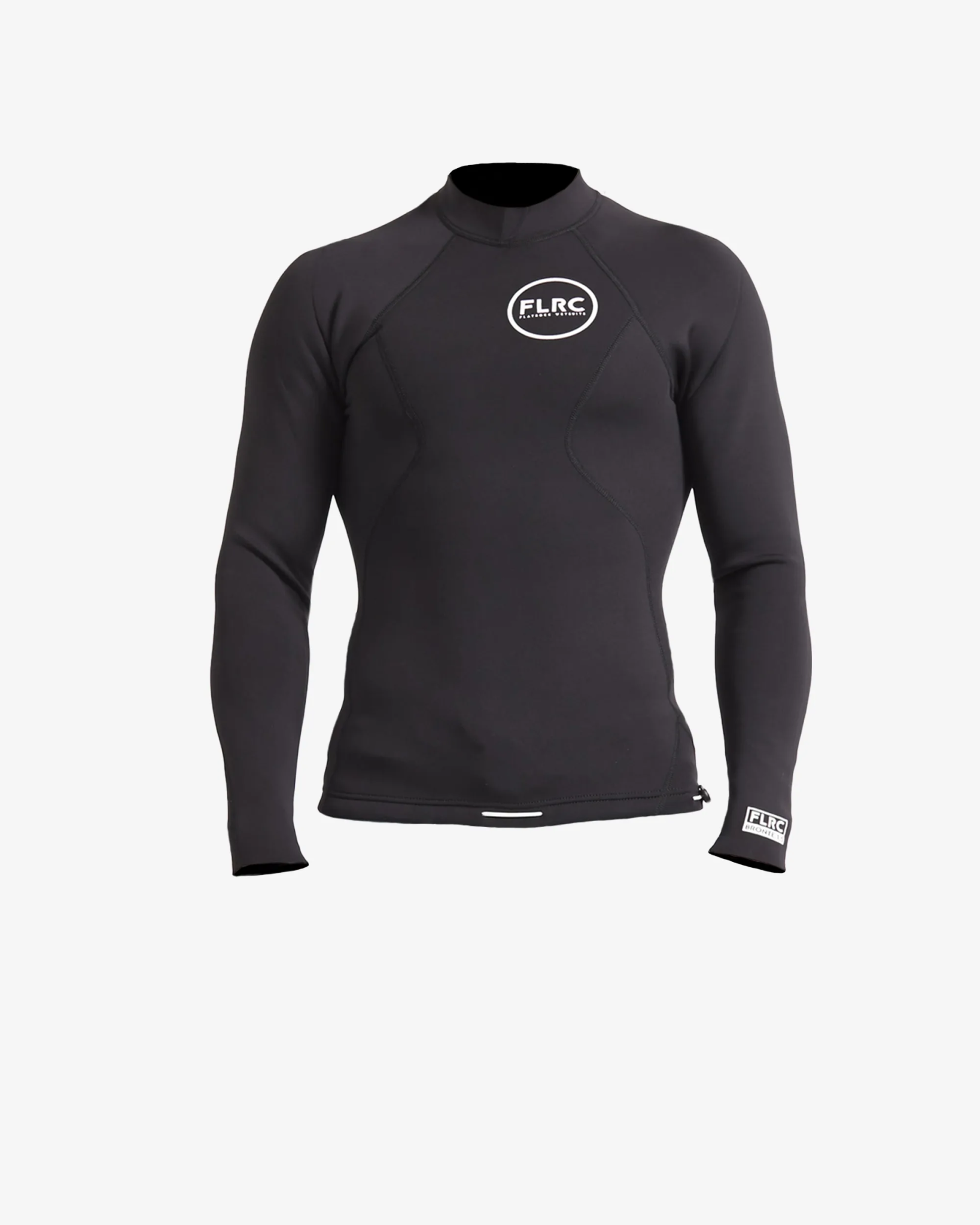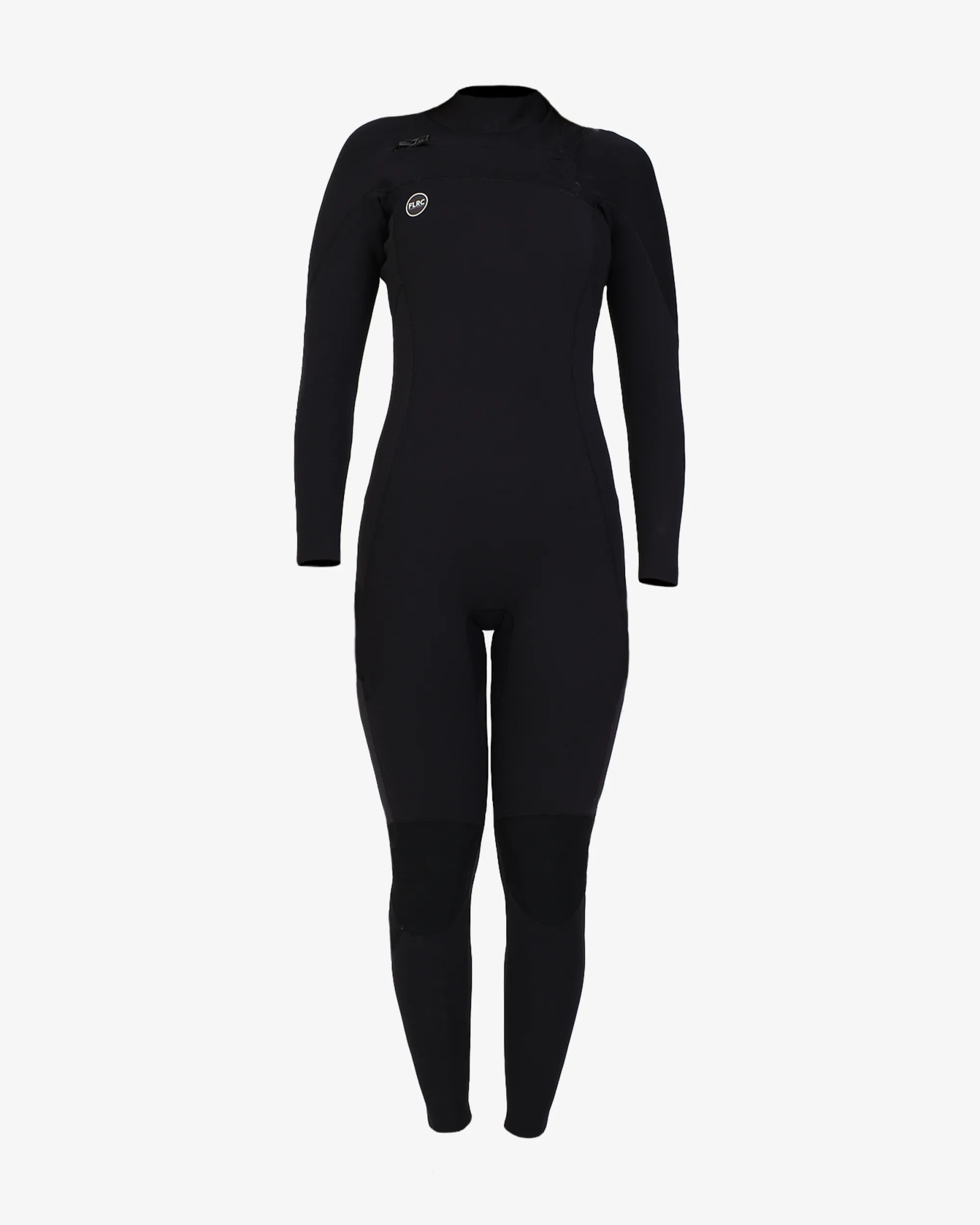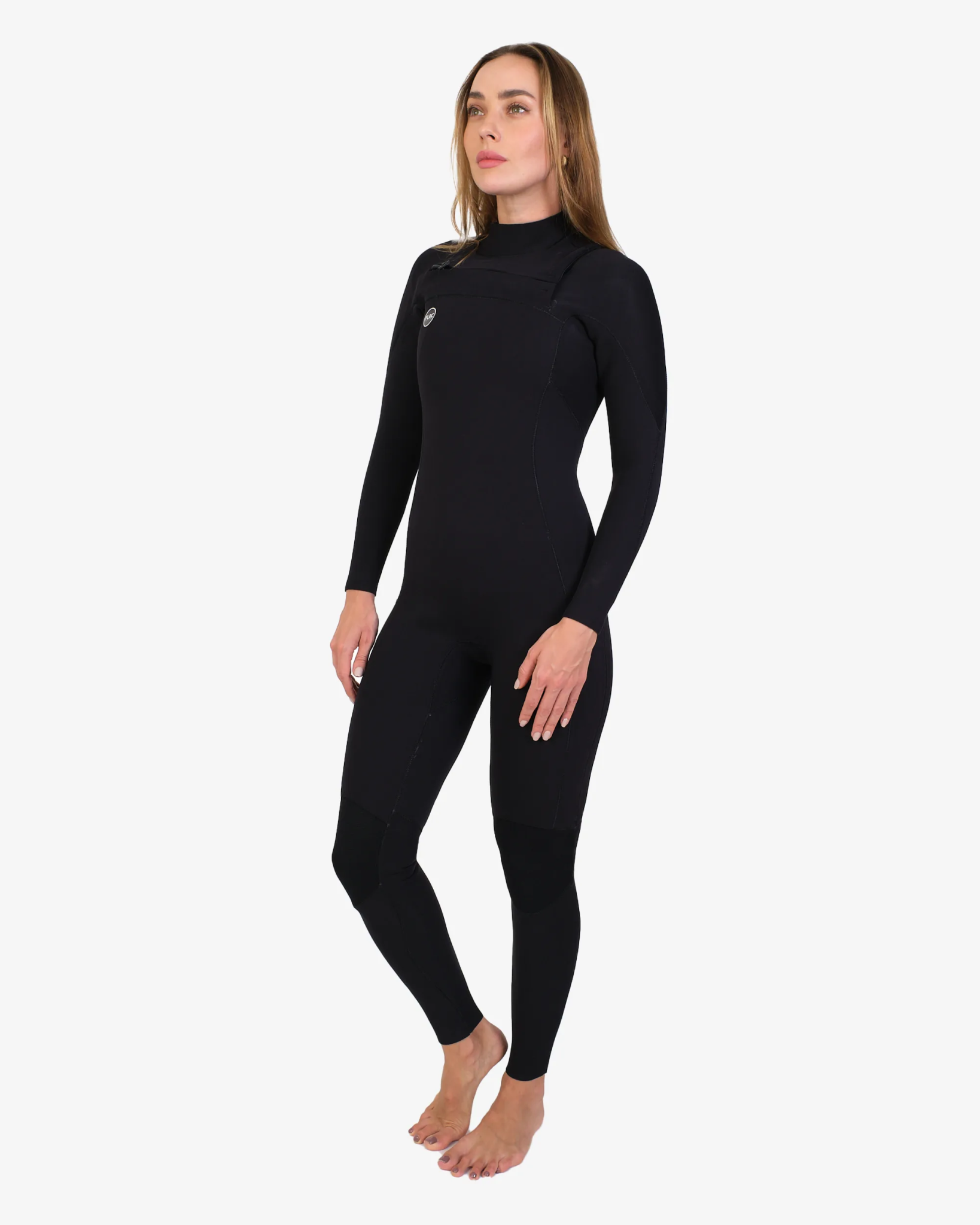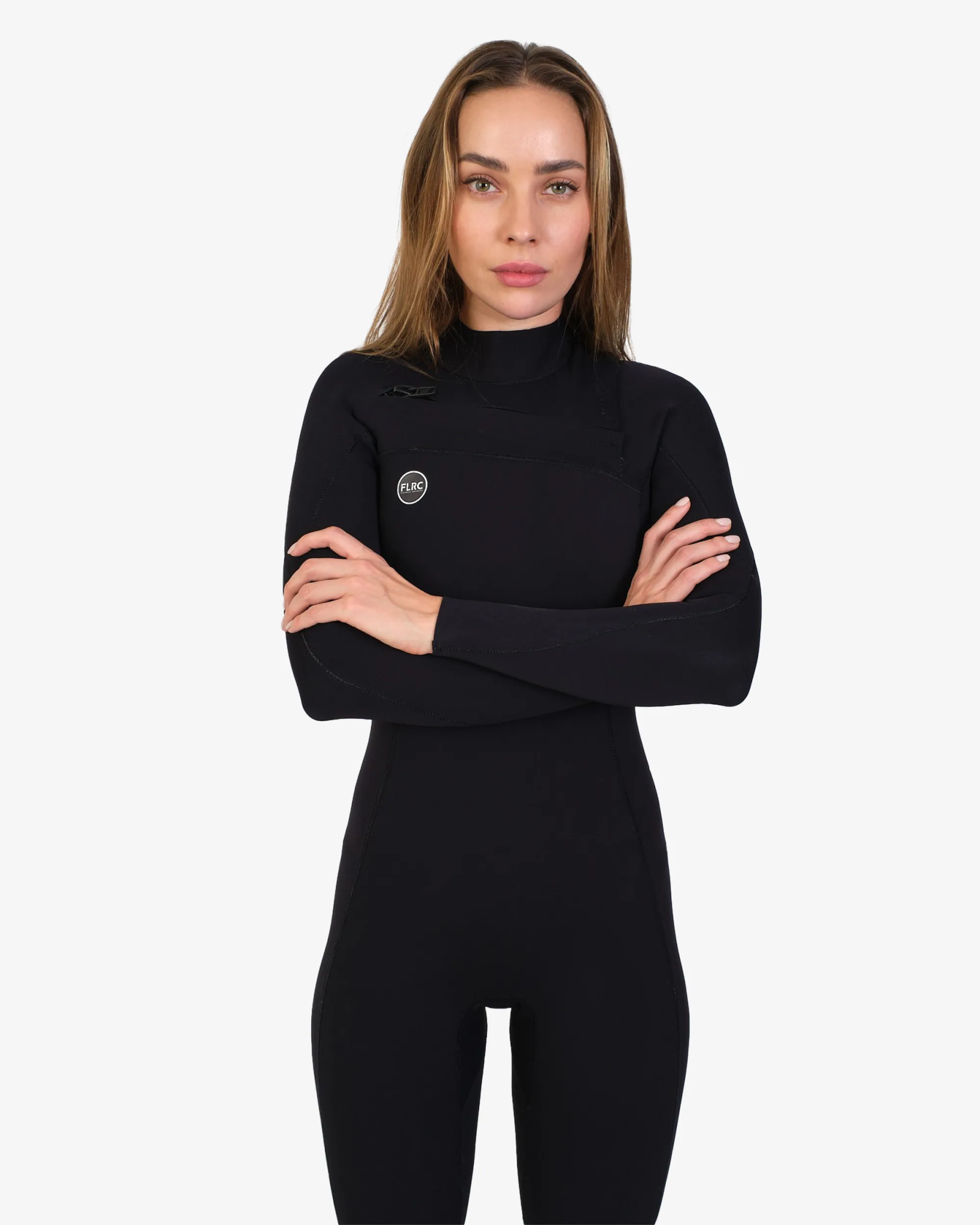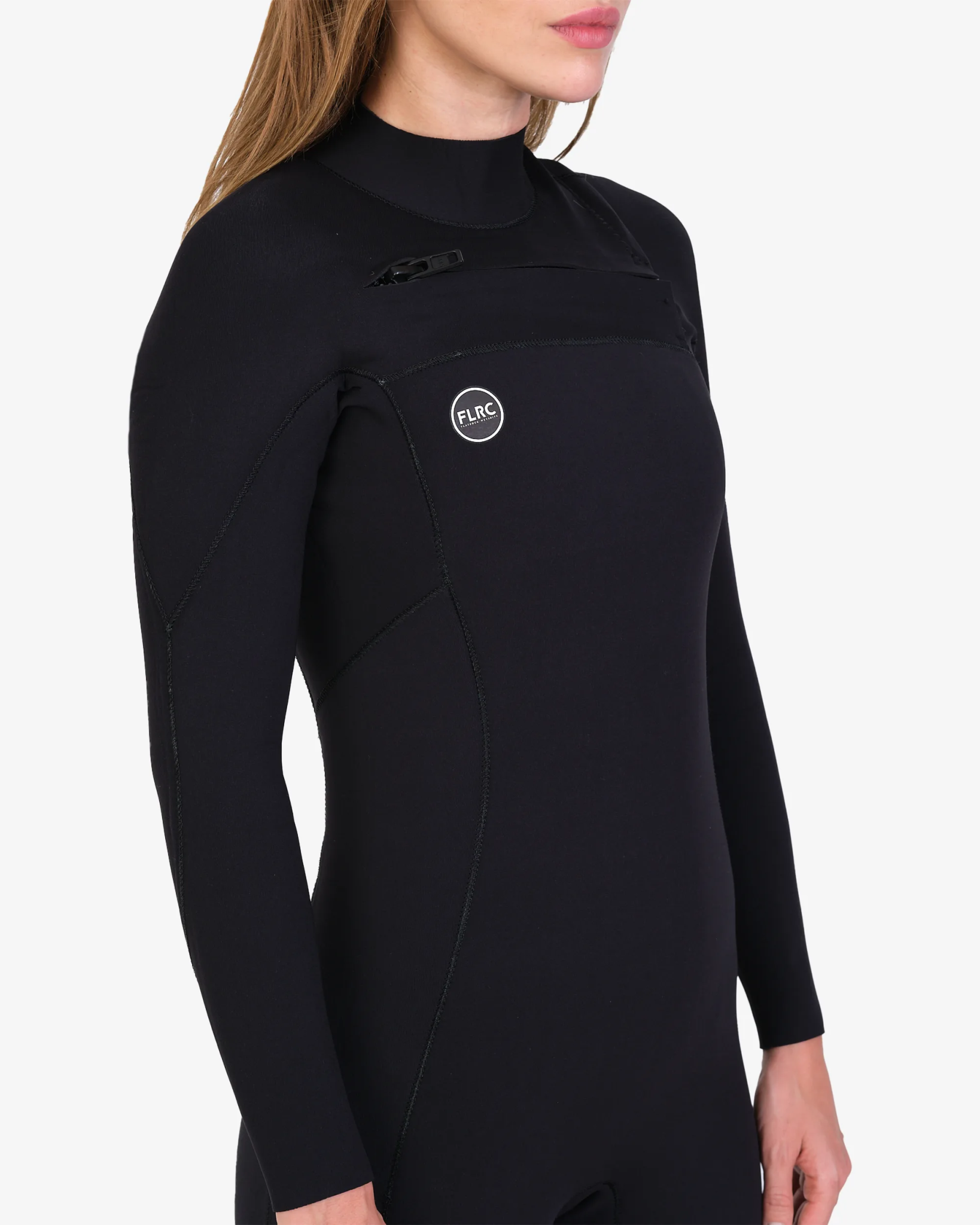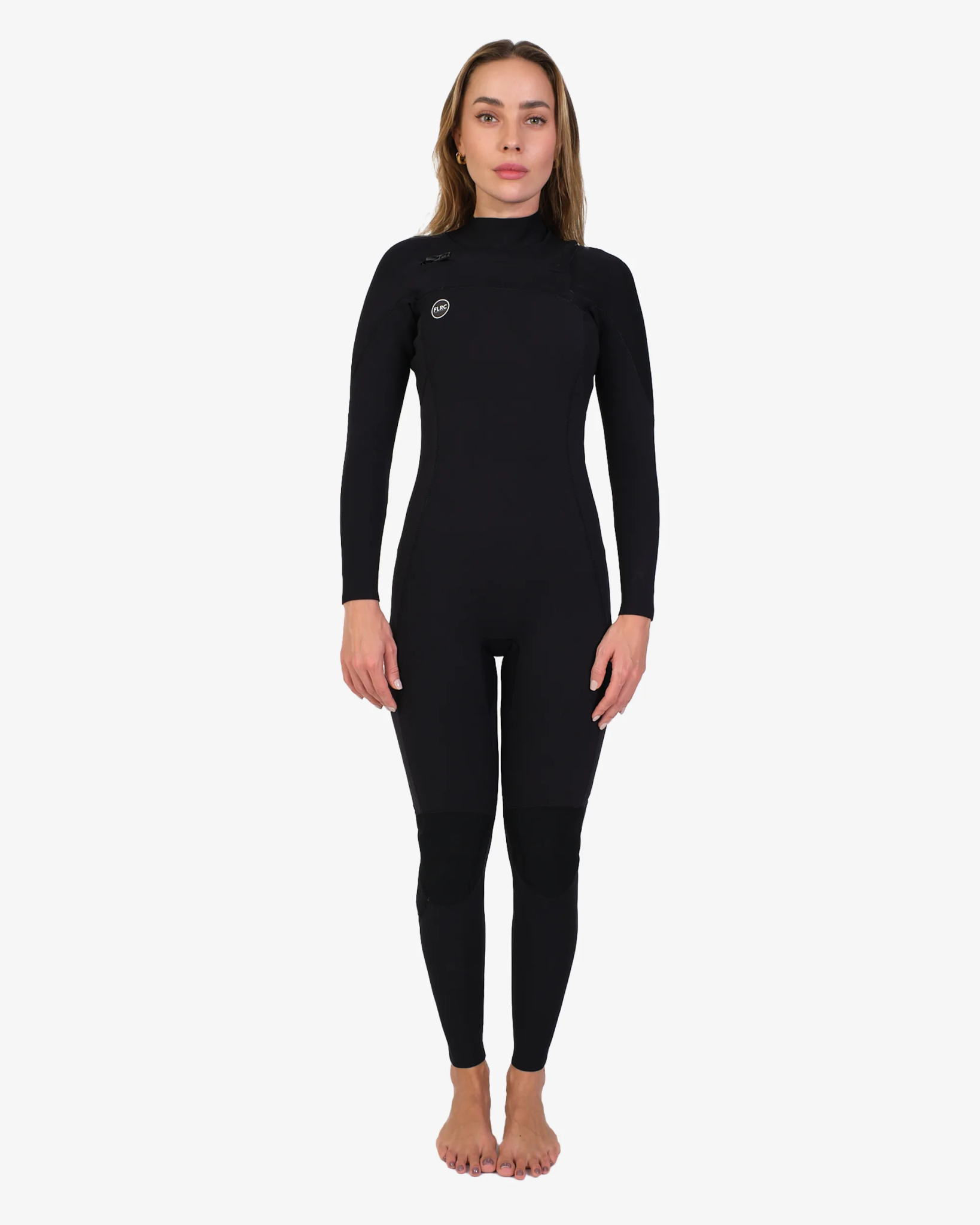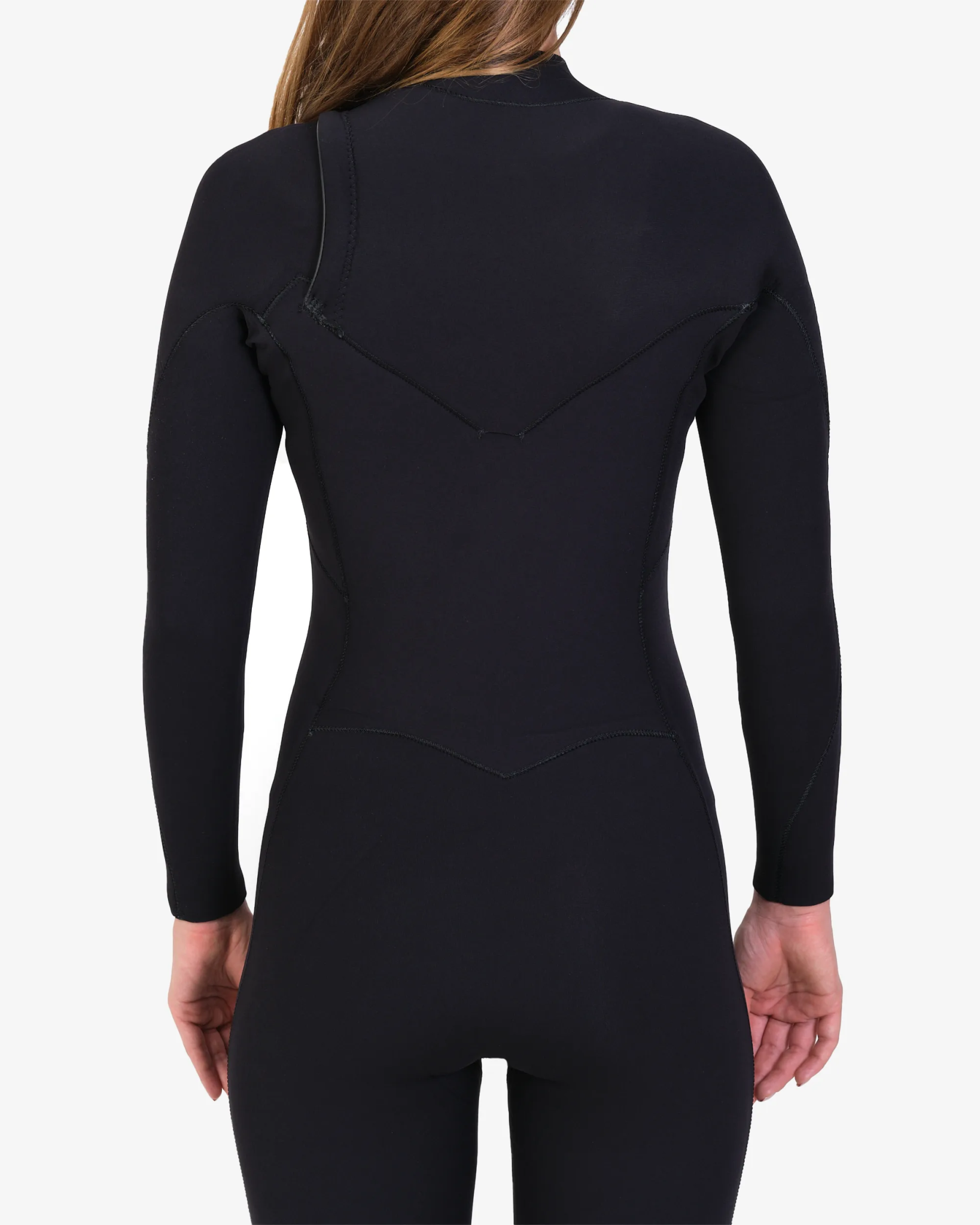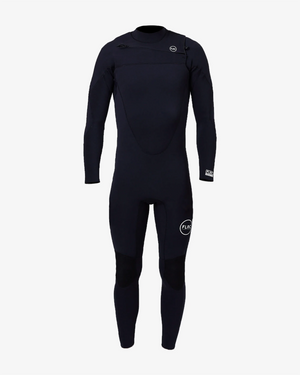


A good 4/3mm wetsuit for Australian surf comes down to three things: seam construction that keeps water out, a zip entry that doesn't dump a flush down your back, and a snug torso fit that traps heat without choking your paddle stroke. At Flatrock Surf, we look at glued-and-blindstitched (GBS) or liquid-taped seams, a sealed zip entry, and thermal-lined chest and back panels as the non-negotiables for a 4/3 that actually performs, not just one that ticks a thickness box on the hangtag.
Thickness alone doesn't tell you much. Two 4/3mm wetsuits can feel completely different in the water depending on how they're built. This guide breaks down what to look for in seam type, zip style, panel lining and fit, then maps out where a 4/3mm is genuinely the right call across Sydney and NSW, Victoria and further south, so you're not guessing at the surf shop.
What makes a 4/3mm wetsuit actually good?
The best 4/3mm wetsuits combine four things: sealed seam construction, a zip entry that doesn't flush water in with every duck dive, thermal lining across the chest and back, and a fit that's snug through the torso but roomy enough through the shoulders and arms to paddle properly. Get any one of these wrong and the 4/3mm rating on the label doesn't mean much once you're actually in the water.
Neoprene works by trapping a thin layer of water against your skin that your body heat warms up. A wetsuit with sloppy seams or a leaky zip lets that warmed layer flush out and cold water flush back in, which is why two 4/3mm suits from different builds can feel completely different on a winter dawn patrol. That's the exact gap between a suit that gets you through a two-hour Sydney sesh and one that leaves you shivering by the second wave. If you want the fundamentals on what to check before buying any wetsuit, our ultimate wetsuit guide covers the basics this article builds on.
Flatlock, GBS or liquid-taped seams: which keeps the water out?
Liquid-taped or fully sealed seams keep the most water out of a 4/3mm wetsuit, followed by glued-and-blindstitched (GBS) construction, with flatlock seams the leakiest of the three. For a 4/3 doing winter duty, treat GBS as the minimum and look for liquid-taped seams across the chest, back and shoulders if you can get them.
| Seam type | Water resistance | Best for |
|---|---|---|
| Flatlock | Low | Warm water, suits under 3mm |
| GBS | Good | Everyday 4/3mm winter use |
| Liquid-taped or sealed | Best | Long, cold-water sessions |
Flatlock seams
Best for: warm-water suits under 3mm, not winter 4/3s.
Flatlock stitching sews directly through both panels of neoprene, which leaves small needle holes that let water seep in. It's comfy and flexible against the skin, but it has no real place in a proper 4/3mm winter suit. It undercuts the whole point of the extra thickness.
Glued-and-blindstitched (GBS) seams
Best for: the baseline standard for any decent 4/3mm wetsuit.
Panels are glued together first, then stitched without the needle passing all the way through the neoprene. That keeps the outer surface intact and cuts water entry dramatically compared with flatlock. This is the minimum seam standard worth looking for on a 4/3mm you're planning to wear through a Sydney or Victorian winter.
Liquid-taped or fully sealed seams
Best for: surfers doing long sessions in cold water who want the driest possible suit.
A liquid seam sealant or internal tape goes over the GBS stitching to close off the tiny gaps stitching alone can't fully seal. It adds a bit of cost and a touch of stiffness, but it's the difference between a damp layer building up after an hour and staying properly dry through a long paddle out.
Chest zip, back zip or zip-free: which entry keeps you warmest?
A chest-zip or zip-free entry keeps you warmer in a 4/3mm wetsuit than a back zip, because there's no zip track running across your back to let water flush in with every wave. A back zip is easier to get in and out of solo, which is a genuine trade-off worth weighing against that small drop in warmth.
Back zip
Best for: surfers who want the easiest entry and exit.
The zip and entry panel sit across the upper back, making the suit simple to pull on and off without help. The trade-off is a long zip track and a wider neck opening, both potential flush points in bigger surf or long sessions.
Chest zip
Best for: most surfers wanting a warmer, more flexible 4/3mm without a full zip-free entry.
The zip sits horizontally across the chest and you climb in through a smaller opening, with no zip panel running across the shoulders. This cuts flush significantly and improves paddle-arm mobility, since there's no rigid zip track sitting across your upper back.
Zip-free entry
Best for: surfers chasing maximum warmth and flexibility who don't mind a firmer entry.
These suits use a stretch panel and internal seal instead of a zip, removing the biggest flush point altogether. Getting in and out takes a bit more effort, but for cold winter dawn patrols it's the warmest, most flexible option of the three.
Does panel lining and torso fit matter more than thickness?
Panel lining and fit matter just as much as the 4/3mm thickness rating itself. Thermal-lined panels through the chest and back add warmth without adding bulk, and a torso that fits snugly, with no loose fabric pooling water, keeps that thin warmed layer sitting where it belongs: against your skin.
Look for a brushed thermal lining or smoothskin panel across the chest and lower back specifically, since these are the panels most exposed to wind chill while you're paddling. Through the arms and shoulders, though, you want the opposite: a looser, more flexible cut so your paddle stroke isn't fighting the neoprene on every reach. A 4/3mm wetty that's snug everywhere restricts movement, and one that's loose everywhere lets cold water flush through the torso. The best men's 4/3mm builds combine both in the one suit. Our guide to what to look for in a wetsuit covers the fit fundamentals in more detail if you're buying online without trying one on first.
Where is a 4/3mm wetsuit the right call in Australia?
A 4/3mm wetsuit is the right call for Sydney and NSW winter surf, and for Victorian surf through the shoulder seasons, but it's generally not enough for a Tasmanian winter. Matching the suit to the water temperature you're actually surfing in matters more than any single feature on the spec sheet.
Around Sydney, Bondi, Manly, Cronulla and Maroubra, water temperatures sit roughly between 18°C and 24°C across the year, dropping toward the bottom of that range through winter. That's exactly where a 4/3mm earns its keep, worn through June, July and August before you drop back to a 3/2mm for the warmer months. Along the Victorian surf coast around Bells Beach, Torquay, Jan Juc and Lorne, water temperatures run closer to 12°C to 18°C, and a 3/2mm covers the warmer months, a 4/3mm with boots takes over once winter water drops below 14°C, and many surfers step up to a 5/4mm plus gloves in deep winter. Further south again, Tasmanian water runs colder still, and a 4/3mm generally won't be enough outside the height of summer. If you're chasing the right pick for your region rather than assuming one suit covers everywhere, it's worth reading up on thickness by region before you buy.
Whatever region you're surfing, check the construction details in this guide against our men's wetsuit range before you commit. Two suits at the same 4/3mm thickness can perform very differently once you're actually paddling out.
Frequently asked questions
What seam type is best for a 4/3mm wetsuit?
Glued-and-blindstitched (GBS) seams are the minimum standard for a 4/3mm wetsuit, with liquid-taped or fully sealed seams the better option for long, cold sessions. Flatlock seams are too leaky for proper winter use.
Is a chest zip or back zip warmer?
A chest zip is warmer than a back zip because there's no zip track running across your back to let water flush in. A back zip is easier to get on and off without help.
What thickness wetsuit do I need for Sydney winter?
A 4/3mm wetsuit is the right thickness for Sydney winter surfing, when water temperatures drop toward the high teens between June and August. Flatrock Surf's wetsuit thickness guide breaks down the right pick for every Australian region.
Is a 4/3mm wetsuit too warm for summer?
A 4/3mm wetsuit is too warm for most Australian summer surf, where a 2mm or 3/2mm suit is more comfortable once water temperatures climb into the low-to-mid 20s. Save the 4/3 for autumn through spring.