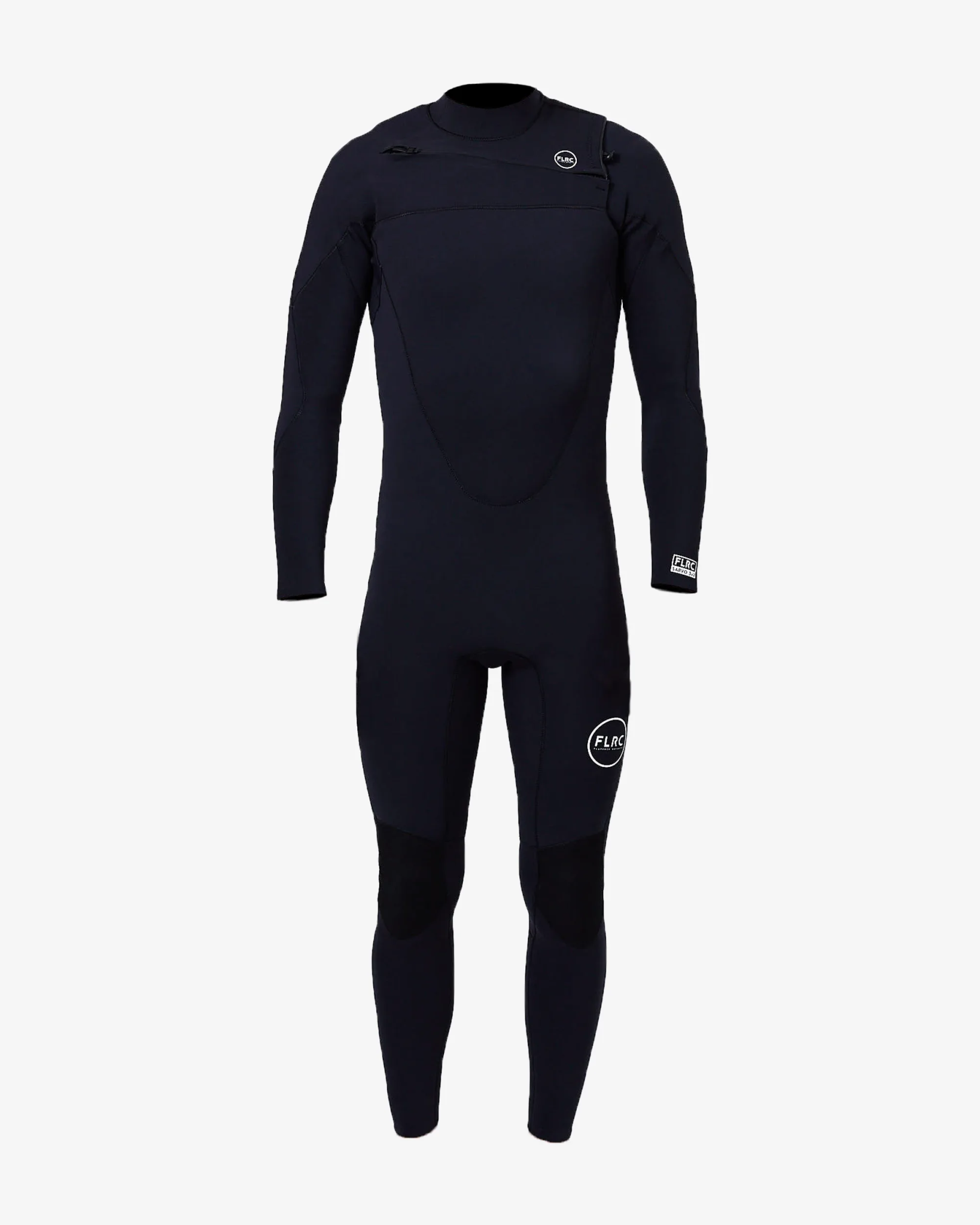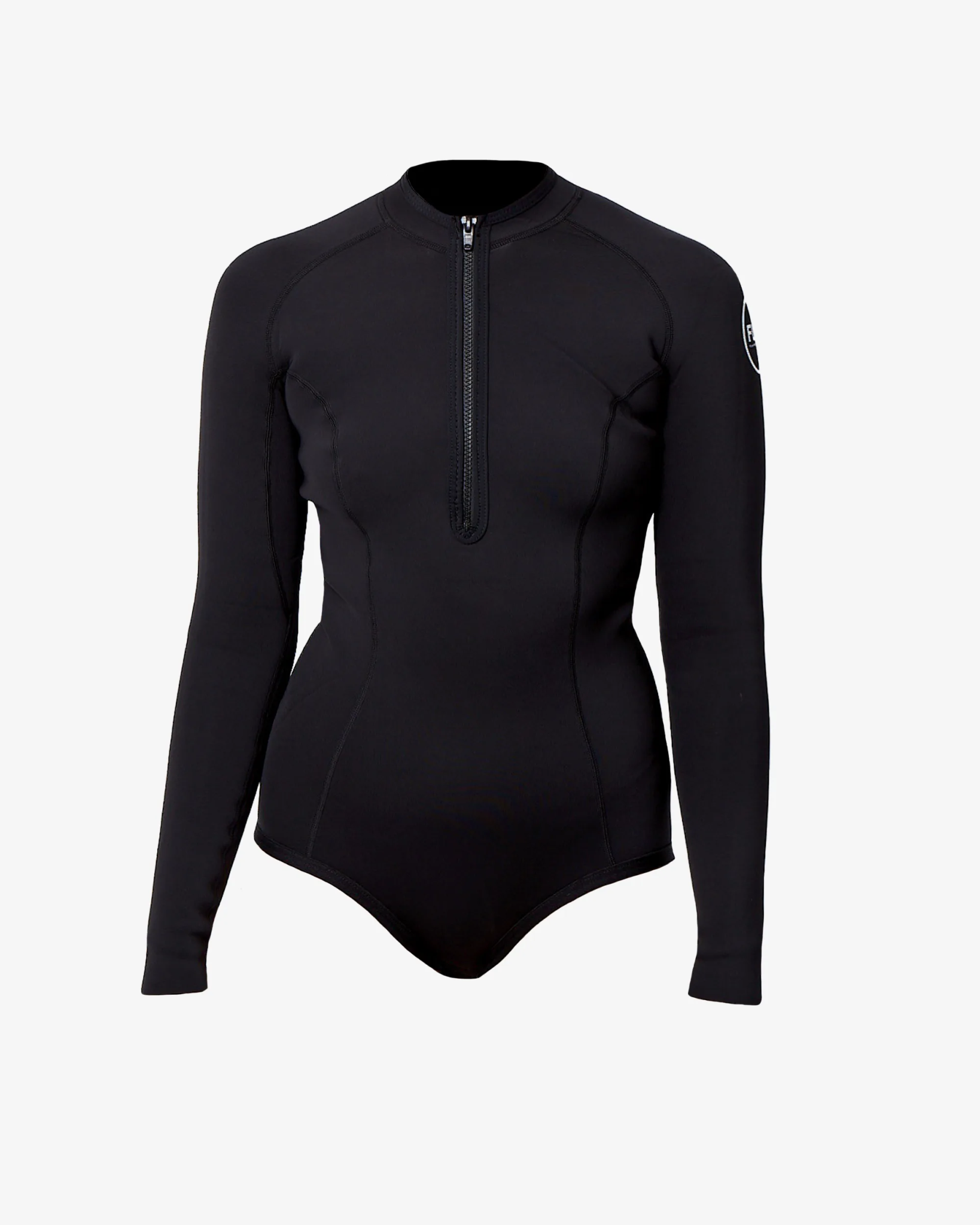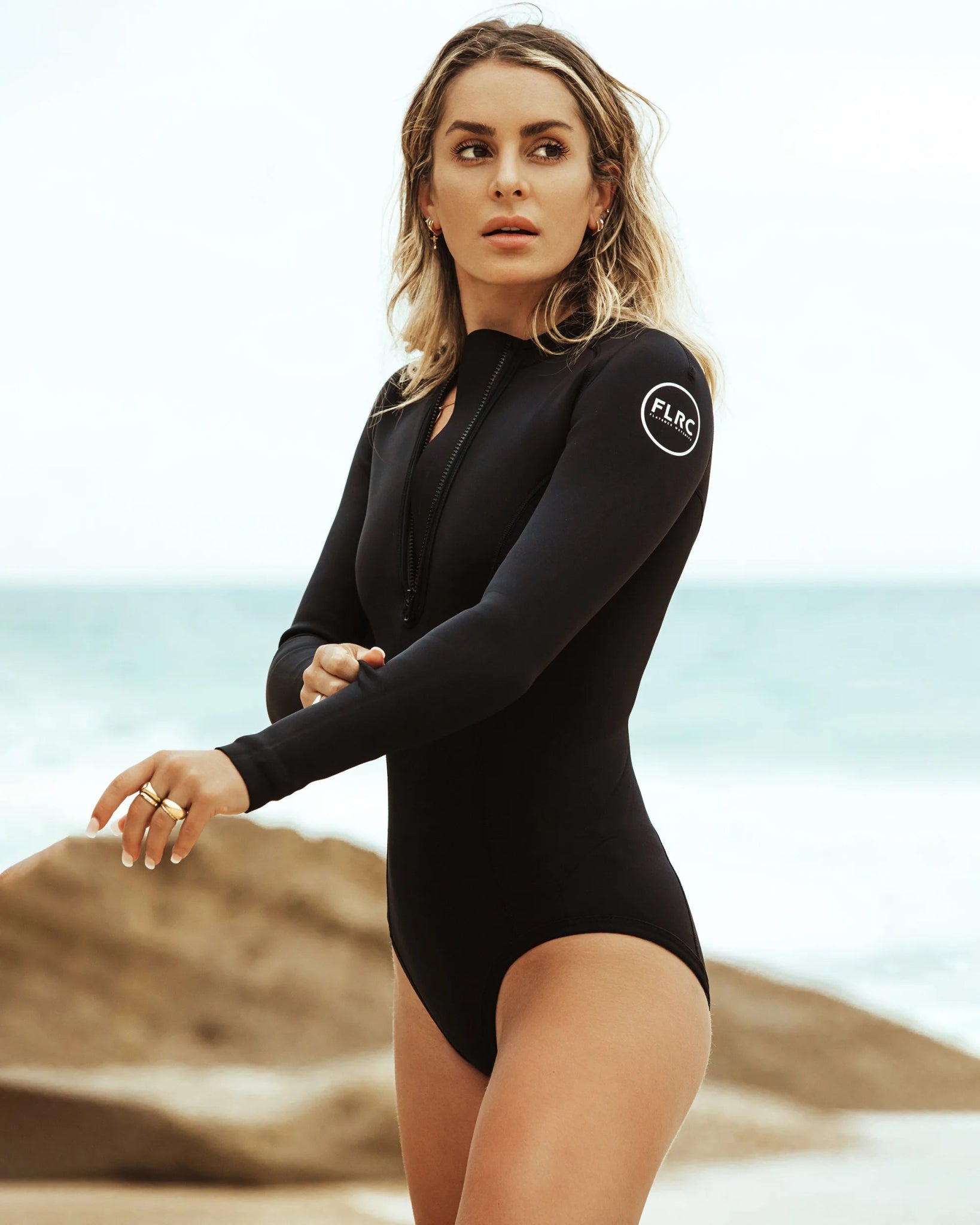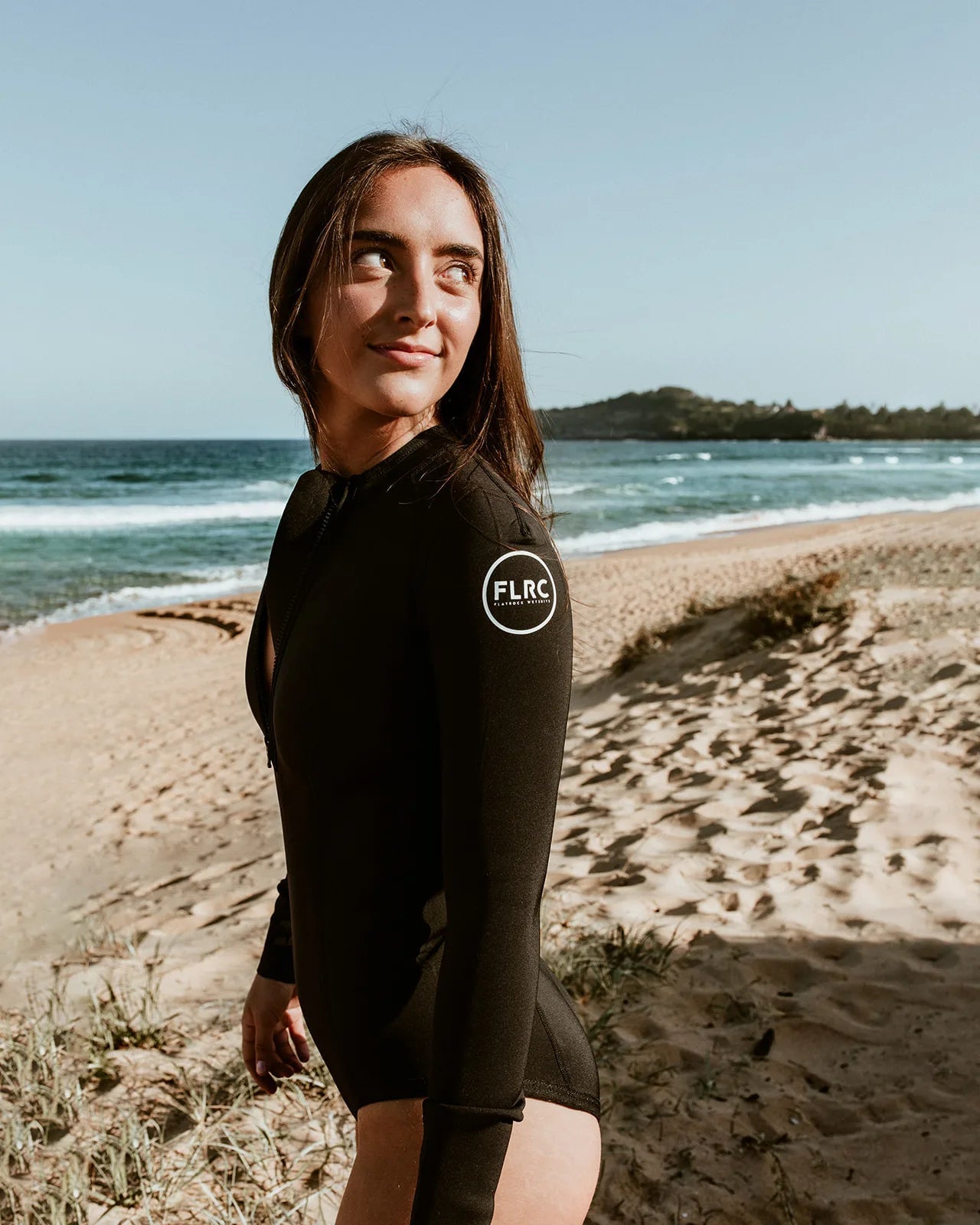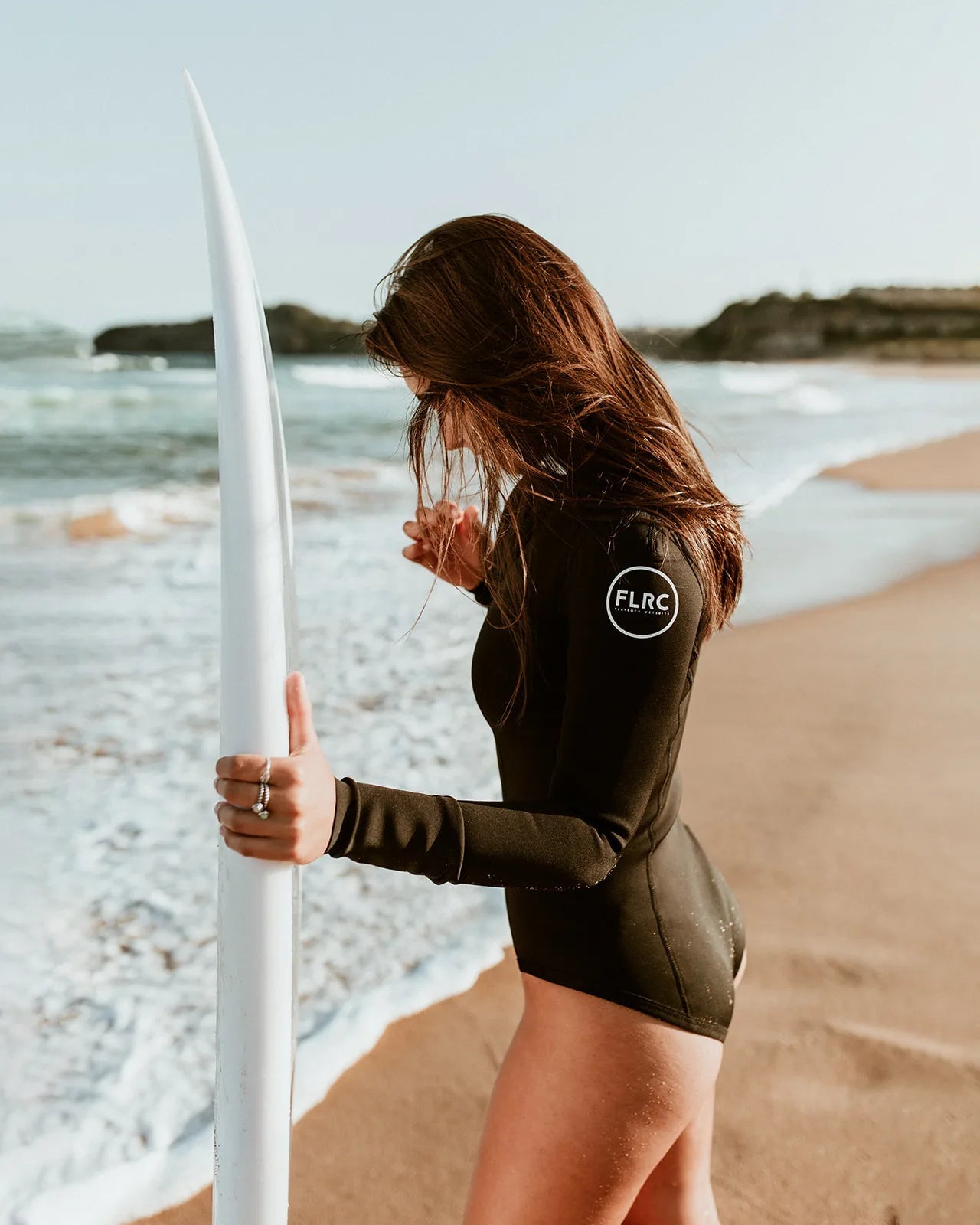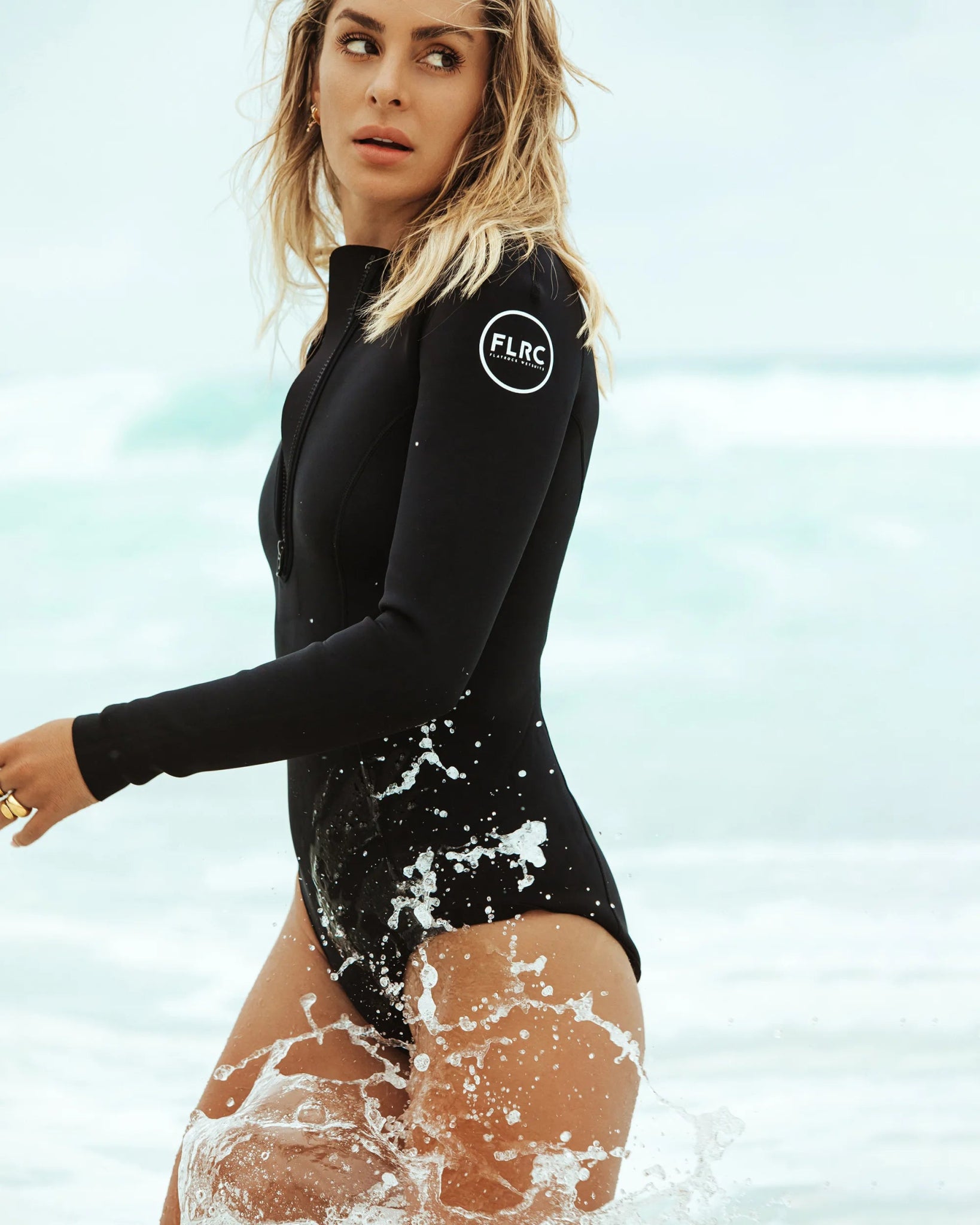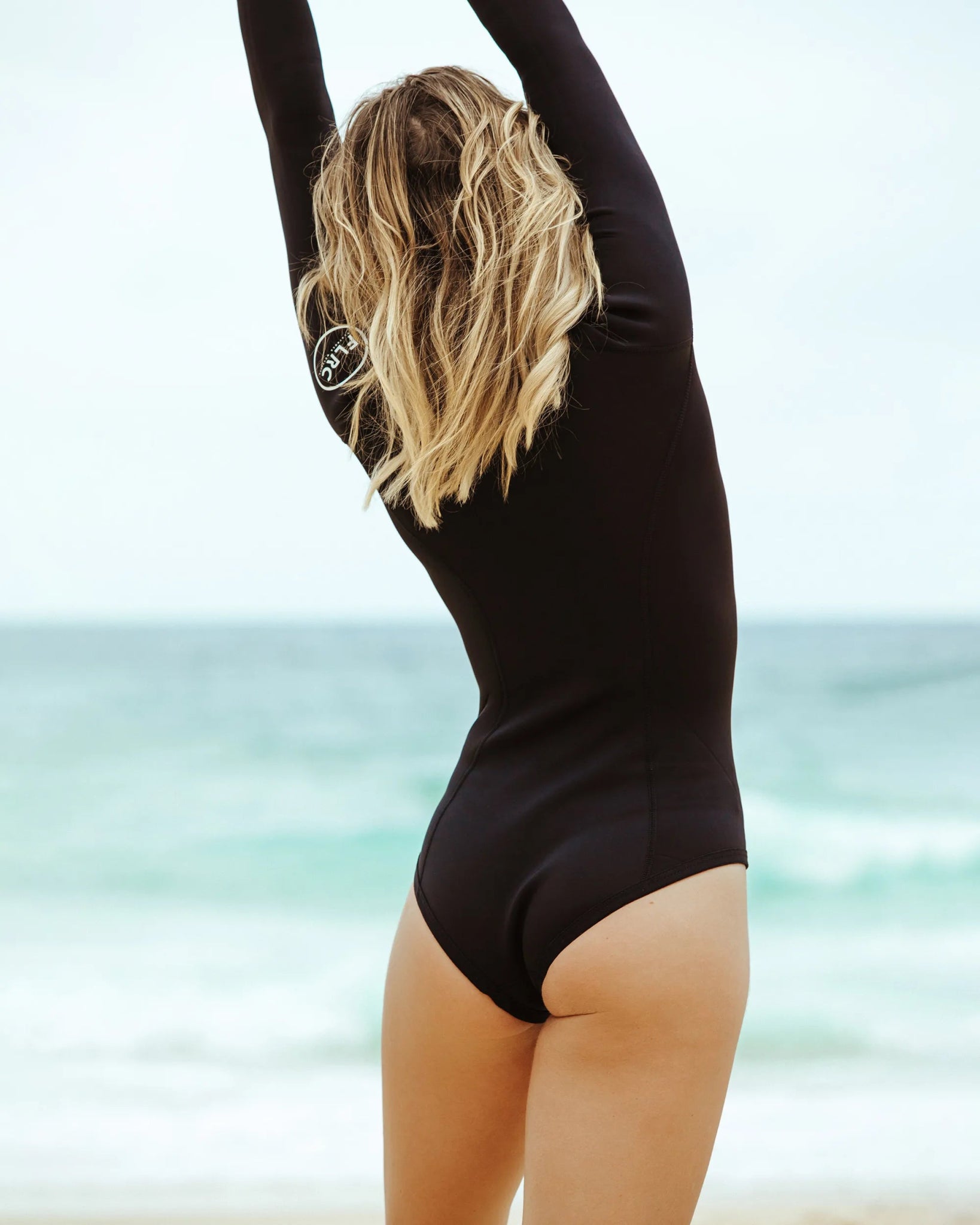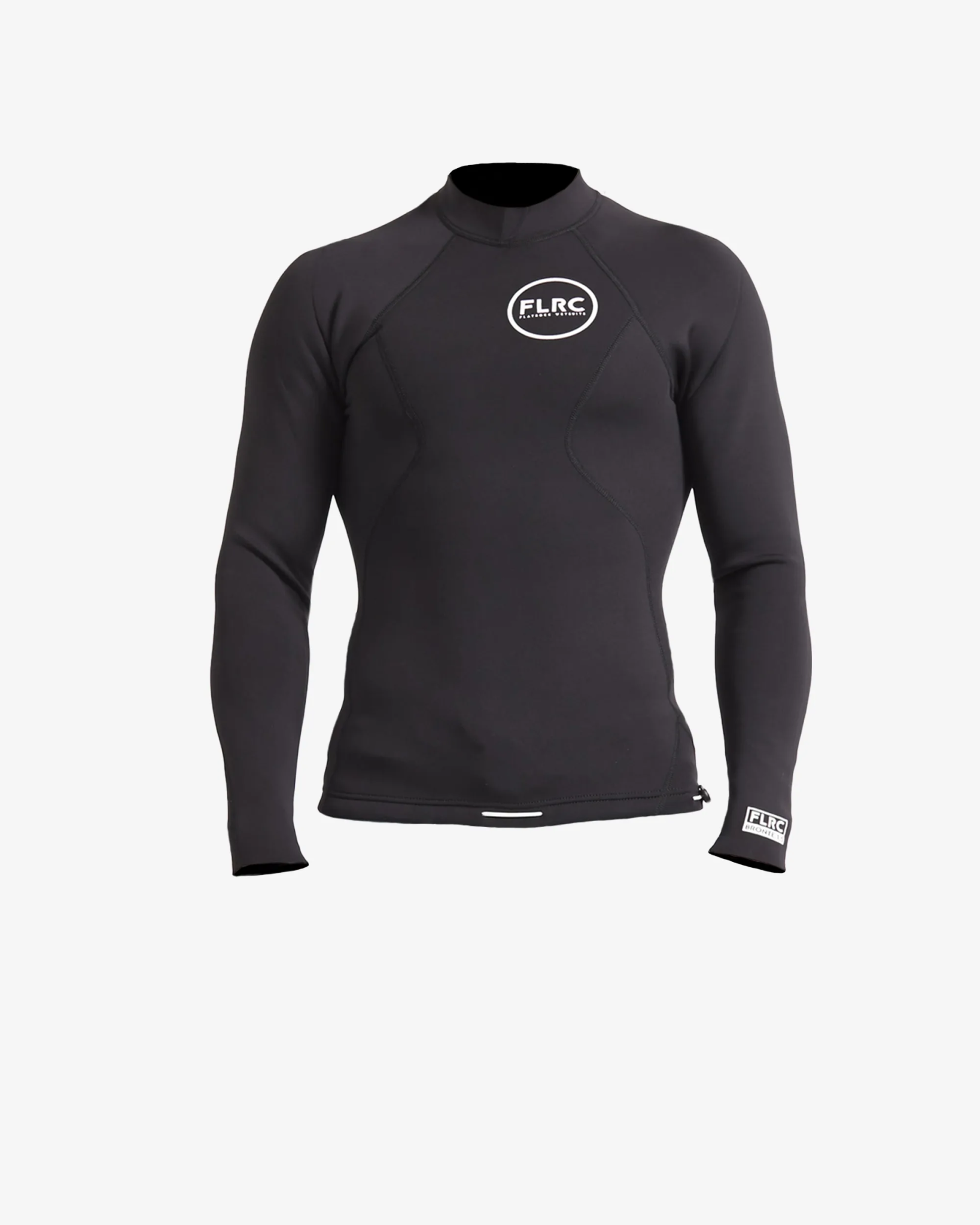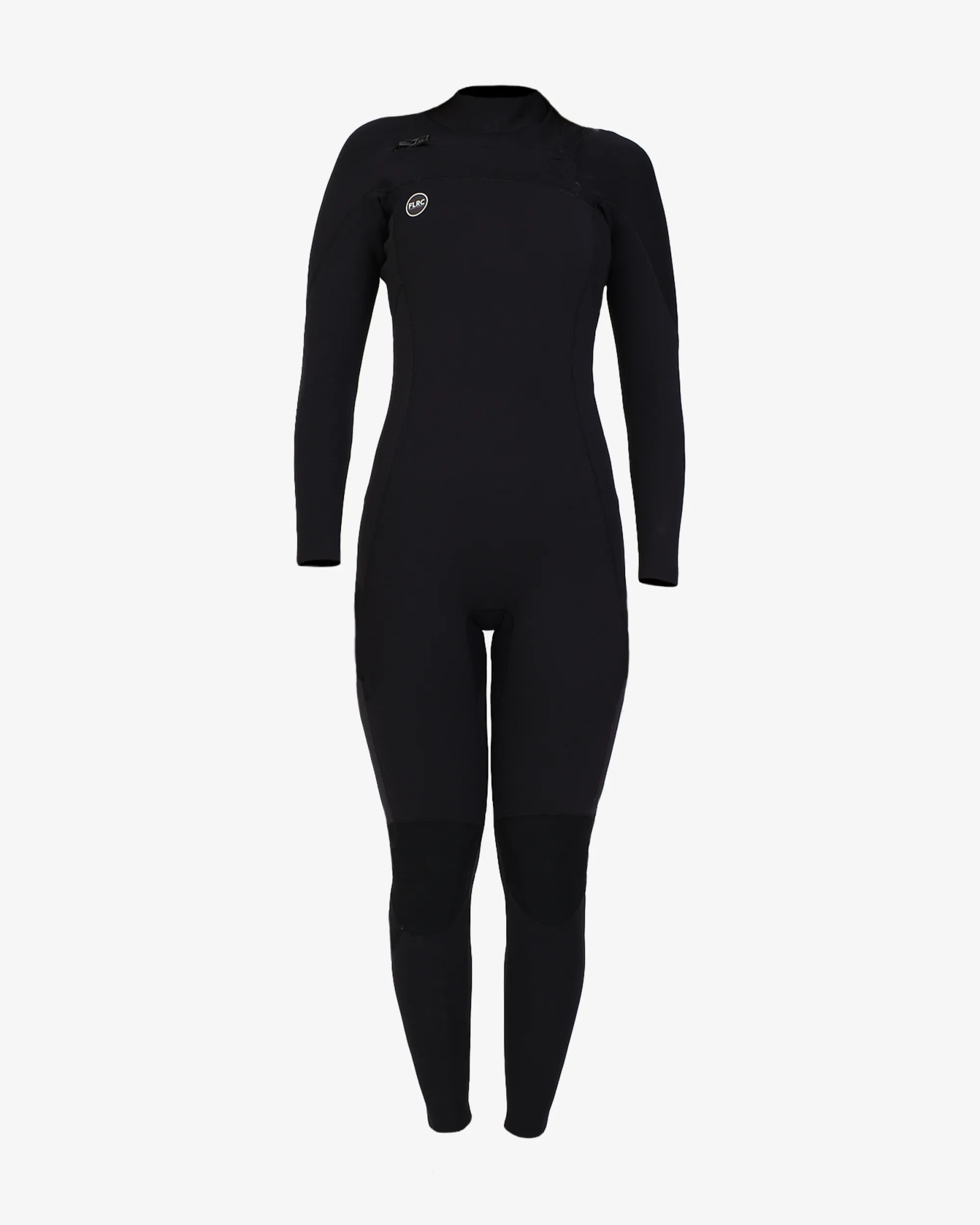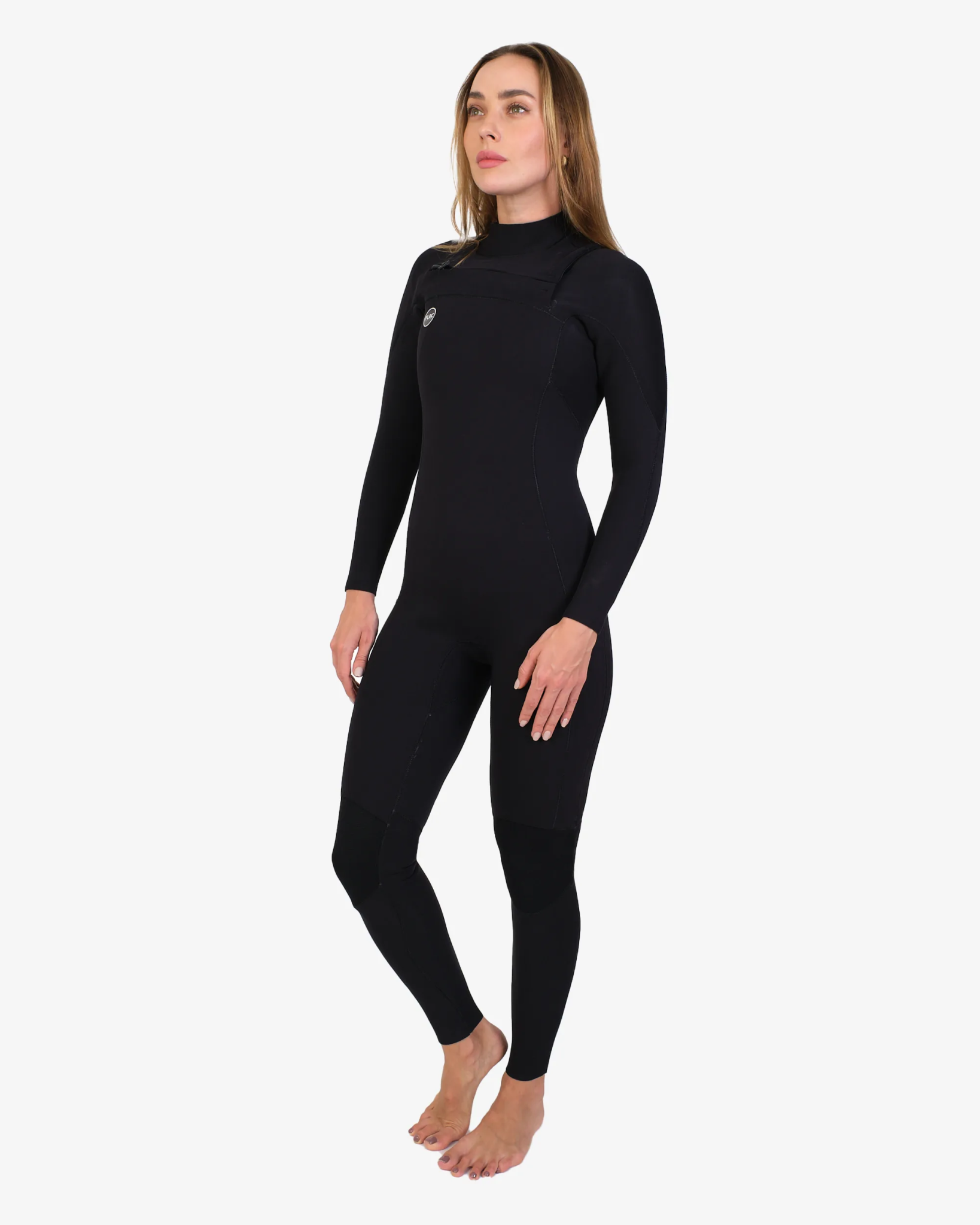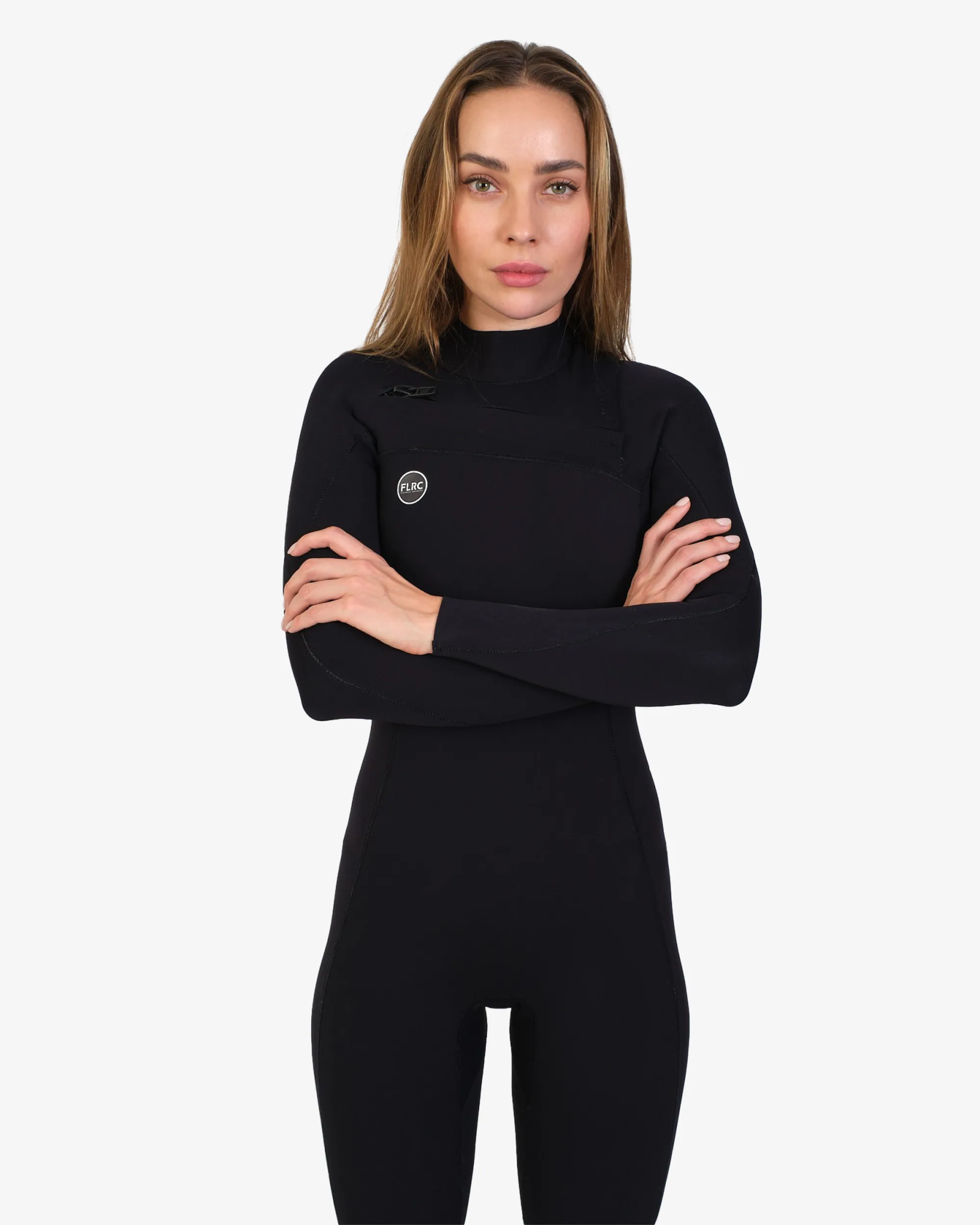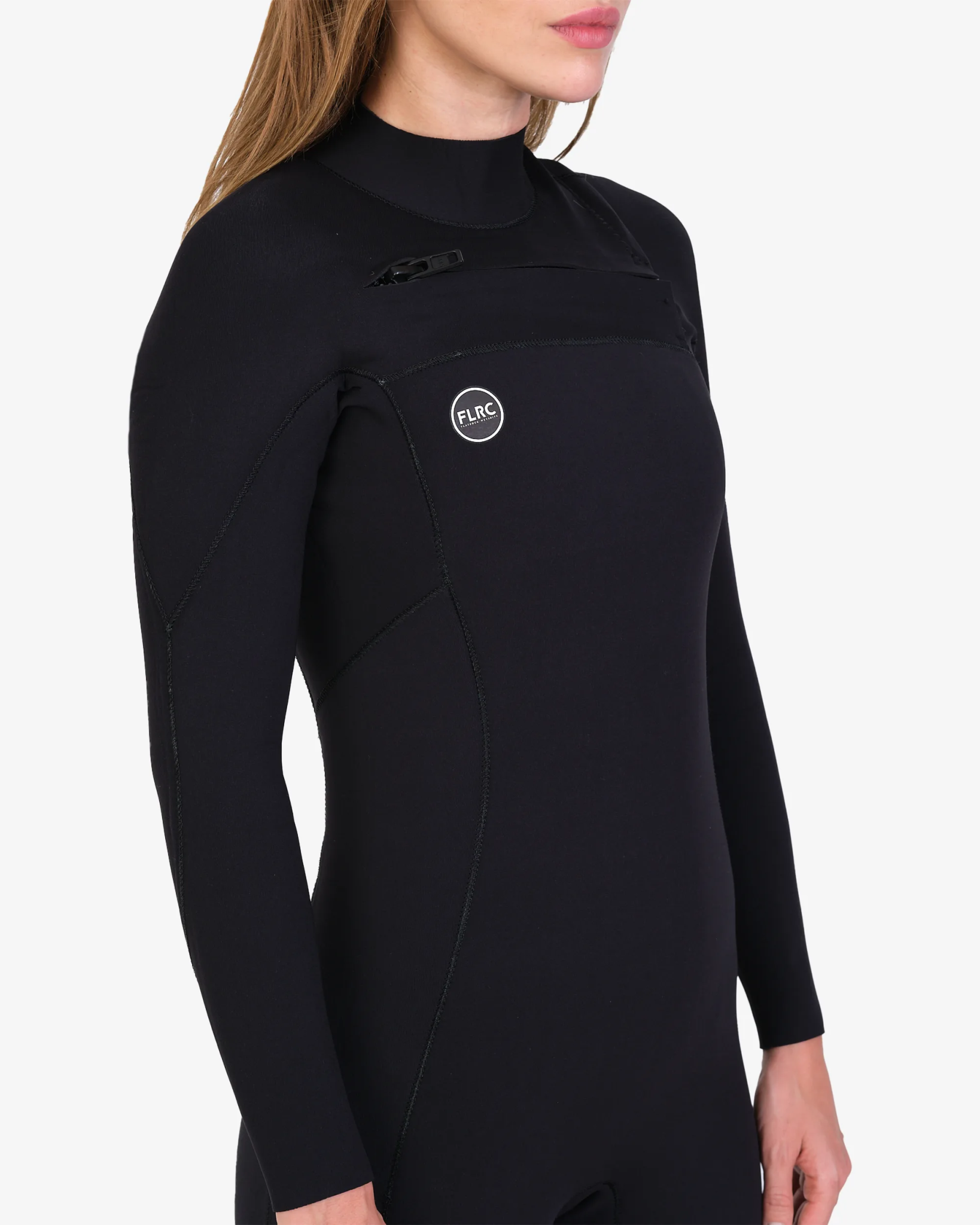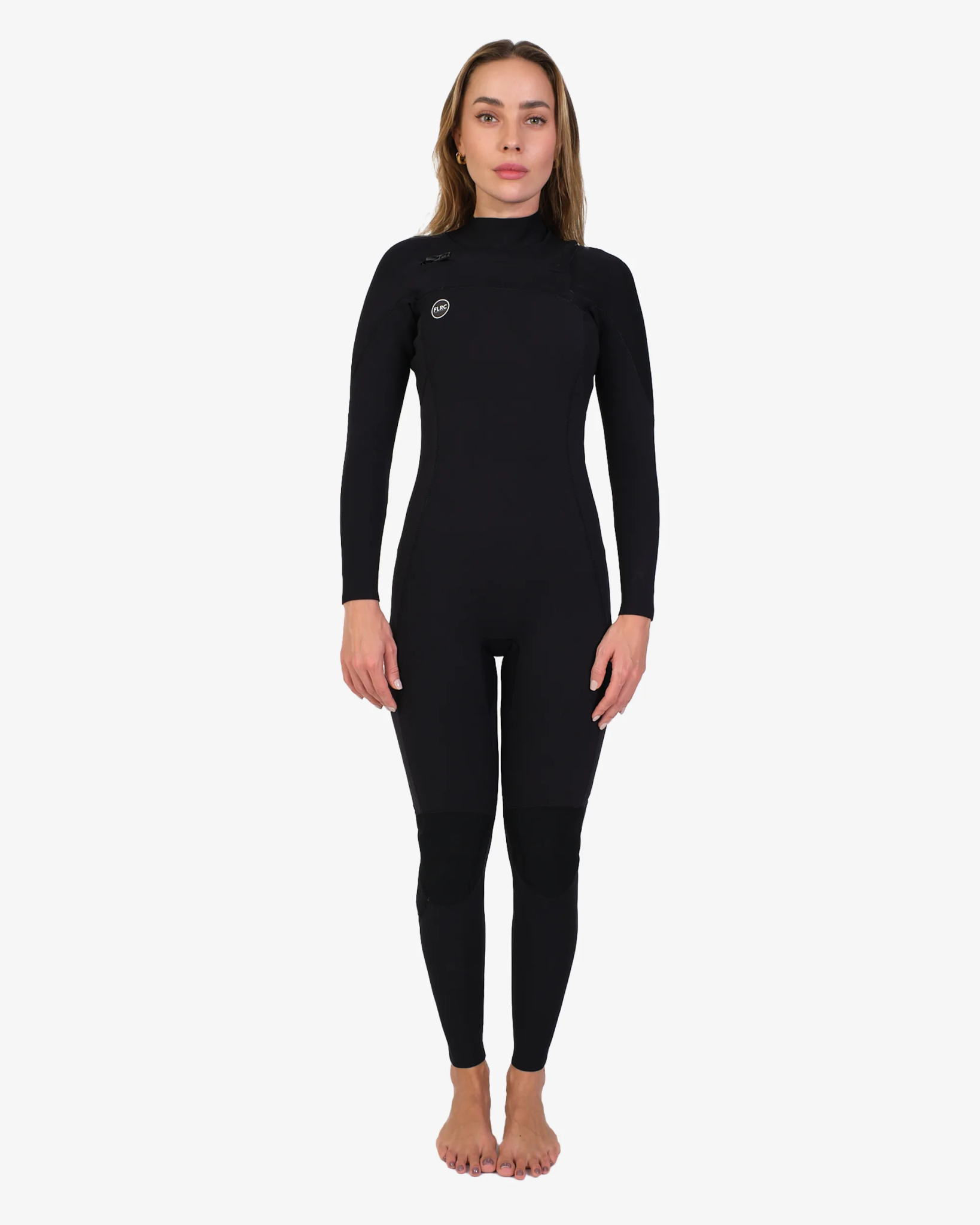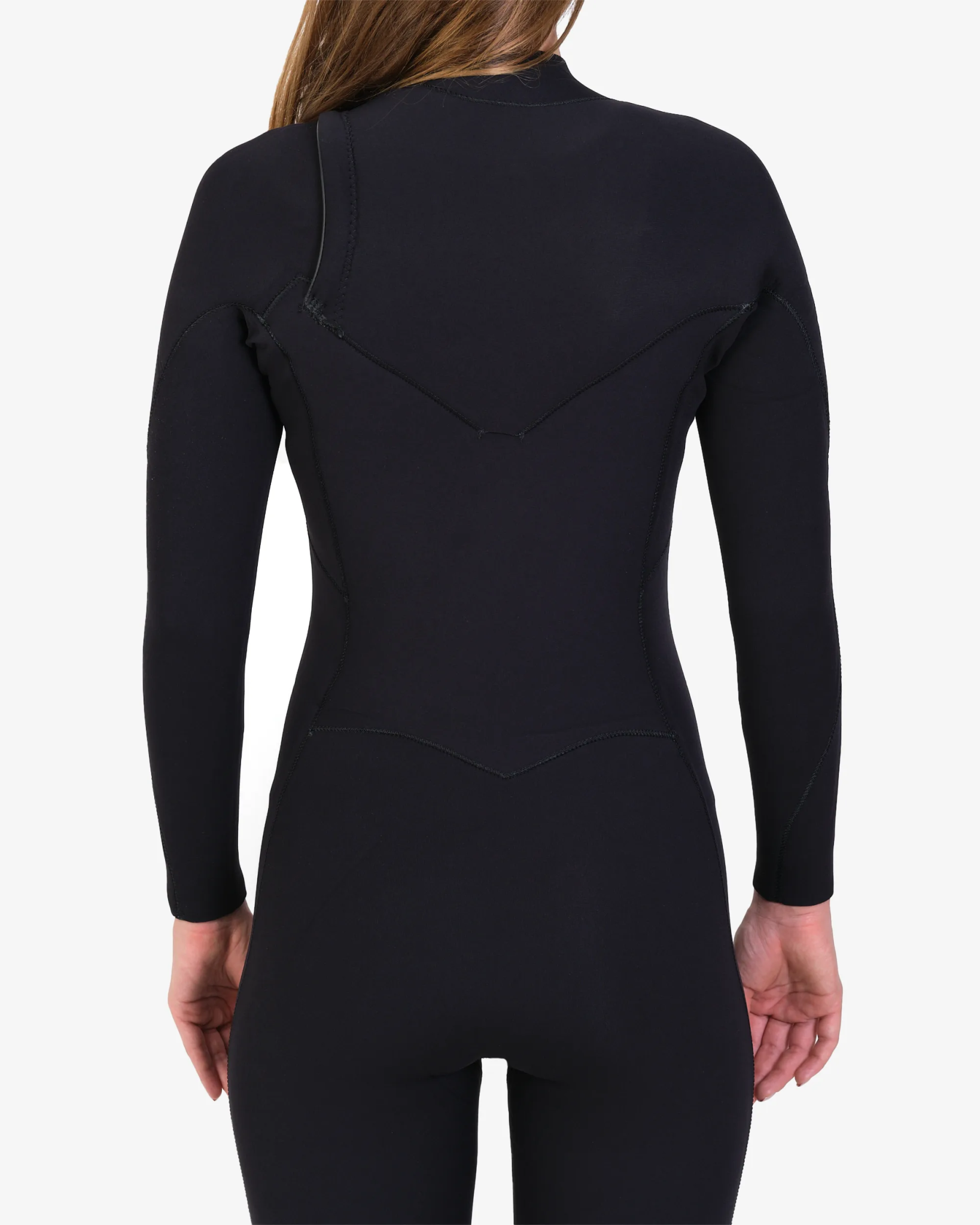


A wetsuit should fit like a firm second skin. Snug against your body everywhere, no gaps at the neck, lower back or cuffs, no wrinkles or pockets of loose neoprene, and enough give that you can still breathe deeply and paddle freely. At Flatrock Surf, we reckon a suit that's snug, sealed and mobile is the right size. Below is a six-point try-on test you can run in a changing room or at home, and each fit fault comes with what you'll feel in the water.
Why does wetsuit fit matter so much?
A wetsuit traps a thin layer of water between the neoprene and your skin, and your body heats it up. Every gap lets that warm layer flush out and cold water rush in, which is why a loose wetty feels freezing. Too tight is no better. It restricts your paddling, rubs your skin and tires you out before the waves have done their part.
How do you test wetsuit fit, checkpoint by checkpoint?
First, get the suit on properly. Work it up from the ankles in small handfuls, use your palms rather than your fingertips (nails can tear neoprene), and seat the crotch high before you pull on the torso and arms. A new wetsuit feels firm when it's dry, because neoprene softens and gives a little with wear. Firm is fine. Painful, or hard to breathe in, isn't. Then work through the six checkpoints below, moving the way you would in the water.
Step 1: Neck
The collar should sit flat against your skin, with no gap at the collarbones or the back of the neck and no pressure on your throat. Look up like you're spotting the next set, then check over each shoulder. A loose neck flushes, so every duck dive sends cold water down your chest and back. Too tight and it feels like a hand on your throat, and it often leaves a rash line by the end of the sesh.
Step 2: Shoulders and armpits
Swing your arms in big freestyle paddle strokes for a minute. The neoprene should move with you, with no pulling across your upper back and no biting into your armpits. If the suit fights every stroke, your shoulders will burn out early. Seams that dig into your armpits mean a rash there, and a gaping armpit flushes every time you reach forward.
Step 3: Chest
Take the deepest breath you can and hold it for a second. You should feel the suit, but you shouldn't have to fight it. If it restricts your breathing, it's too small or too stiff across the chest. If you can pinch a handful of loose neoprene or see wrinkles, it's too big, and that slack turns into a pocket that fills on your first duck dive.
Step 4: Lower back
Bend forward, then arch your back the way you do when paddling, chest up and eyes on the horizon. The suit should stay flat against your spine the whole way. A gap here is a classic cause of a cold back. Water pools in the pocket and each stroke can push more through.
Step 5: Torso length
Stand tall, then drop into a deep squat and hold a surfer's stance. The crotch should sit snug without dragging your shoulders down. If it does, the torso is too short for you, and you'll feel it as tight, tired shoulders on every paddle. If the crotch hangs low and material bunches at your waist, the suit is too long or too big overall. It'll drag on your pop-up and collect water.
Step 6: Wrists and ankles
Cuffs should sit flat and snug, with no deep grooves and no tingling in your hands or feet. Reach overhead, then squat. They shouldn't ride up your forearms or calves. Loose cuffs let water in with every stroke, so your hands and feet go cold first. Cuffs that are too tight cut circulation and leave your fingers numb. Folds bunching at the ankles usually mean the legs are too long.
How do you read a wetsuit size chart?
A wetsuit size chart matches your height, weight and chest measurement to a size, and all three should land on the same one. Measure your chest with a soft tape around the fullest part, under your armpits and across your shoulder blades, standing relaxed. Measure your height barefoot and use your current weight. Many charts also offer tall or short variants of a size, often written as MT for medium tall, for when your height and chest point to different sizes.
Use the chart for the exact suit you're buying, not the letter on your last one, because cuts differ between suits. Whichever range you're browsing, men'swomen's or kids'check the size info for that specific suit before you order.
What should you do if you're between sizes?
Trust your chest measurement first, then take the smaller size if it passes the breathing and shoulder tests. Here's how we'd work through it:
- Chest over weight. If your chest says one size and your weight says another, go with the chest. That's where the suit has to seal.
- Height mismatch. If the chart has a tall or short variant, try that before jumping a whole size.
- Snug beats slack. If the smaller size passes the deep-breath and paddle-stroke tests, go with it. Neoprene gives with wear, and a loose suit just flushes. If it fails those tests, go up.
- Try the thickness you're buying. A 3/2mm has 3mm neoprene through the torso and 2mm in the arms and legs. A 4/3mm has 4mm and 3mm, and thicker neoprene is less flexible, so the same size can feel tighter in a thicker suit. Check thickness and fit together. Our guide to which wetsuit thickness is best for Australia will help you pick.
When do you need a different cut, not a different size?
If the same fault turns up in two sizes, the problem is the cut. A different size only scales the pattern. It can't change its shape. Common signs:
- The chest fits but the lower back gaps in every size. Your torso proportions don't match the pattern, so try a tall or short variant or a different cut.
- The shoulders pinch in the size that fits everywhere else. A different cut or entry style, such as back zip or chest zip, can change how the neck and shoulders feel.
- The neck or cuffs keep gapping even though the torso is right. Neck and limb proportions vary from person to person, so try a different cut.
- A men's cut keeps gapping or pinching in the same spot. Men's and women's cuts are shaped differently, so it's worth trying the other cut, and vice versa.
It's spring 2026, so if your current wetty fails more than one of these tests, now's a good time to try on replacements well before you need them. Browse our full range of gearand for more on choosing a suit, read what to look for in a wetsuit and the ultimate wetsuit guide for surfers.
Frequently asked questions
How do you know if a wetsuit fits?
At Flatrock Surf, our six-point test covers the neck, shoulders and armpits, chest, lower back, torso length, and wrists and ankles. If every spot is snug without pinching, and you can still breathe deeply and paddle freely, the suit fits.
How tight should a wetsuit be?
Snug and firm, like a second skin, with no gaps or wrinkles. But never so tight that it restricts your breathing or arm movement. A new suit feels firm when it's dry because neoprene softens with wear.
How do you know if a wetsuit is too big?
A wetsuit that's too big has wrinkles, gaps at the neck, lower back or cuffs, and pockets that balloon with water. In the surf you'll feel constant flushing and cold patches, usually across your back and chest.
Should kids buy a wetsuit to grow into?
No. A loose wetsuit flushes and leaves kids cold, so size to your child's current height, weight and chest measurements. Replace the suit when they outgrow it.