
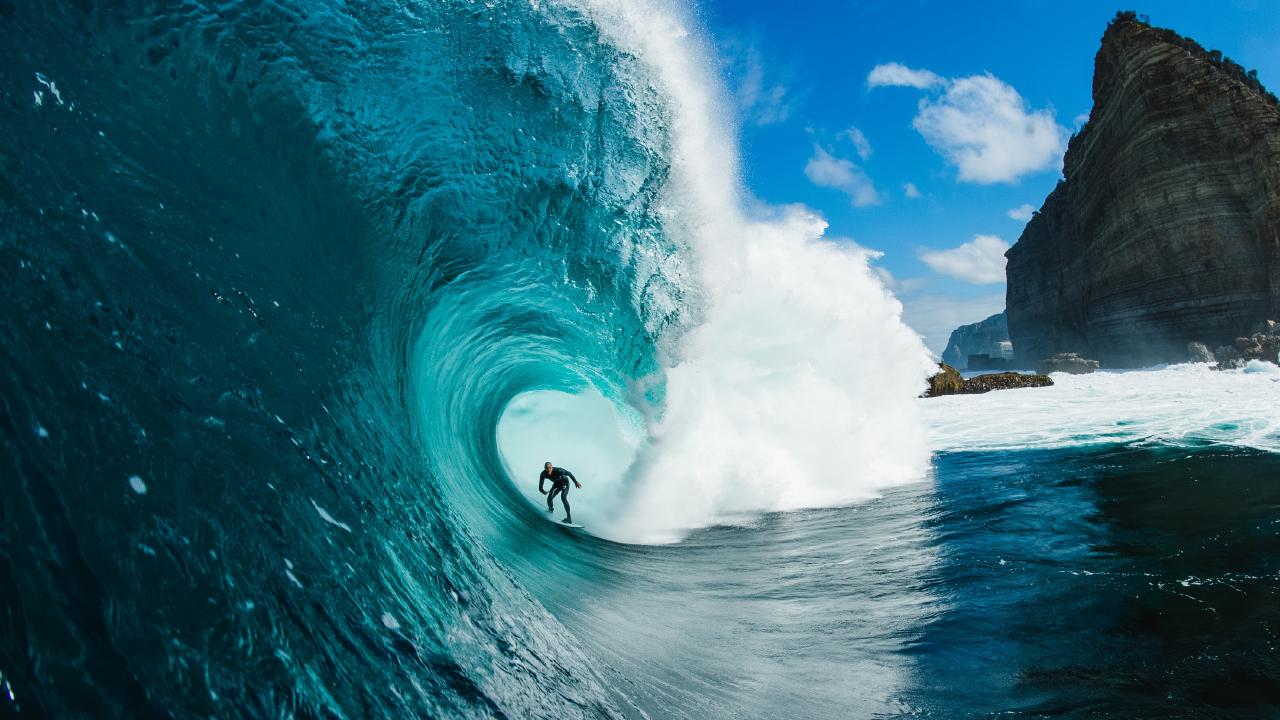
The best way to find quality surf photography on Instagram is to follow the waves, not just the names. At Flatrock Surf, we reckon the quickest route is to search the location tag for a spot you love, then follow the photographers credited on the strongest posts, especially the ones who specialise in that wave and keep shooting it when conditions get challenging. Even in spring 2026, that beats scrolling hashtags for hours if you want a feed full of death-defying barrel shots and serene dawn patrol moments.
You won't find a ranked list of names here. We don't put our name behind rankings of other people, so this guide is organised by wave and spot instead. Below, we cover what makes a surf photo great, the Australian and overseas breaks worth following, and how Instagram can sharpen your own shooting.
What makes great surf photography?
A great surf photo is more than a surfer on a wave. The best ones come down to composition, light and timing. Technically strong surf photographers know where to sit in the lineup, how to read what's about to happen, and how to work with the natural light they've got. Do it well and the frame shows you how much power is in the water.
Light does most of the heavy lifting. The low sun in the first hour after sunrise and the last hour before sunset gives warm, directional light that makes the water glow and the spray glitter, which is why so many great surf feeds are full of dawn patrol and arvo sessions.
Shooting from the water takes specialised equipment and real physical courage. Plenty of the best water photographers work from the impact zone, sometimes risking serious injury to get the right angle. You can see that commitment in the results.
How do you find the best surf photographers on Instagram?
Start with the spot, not the photographer. Instagram lets you search a place name and browse everything tagged there, so a wave you already care about is the easiest way in. Here's how it works:
- Pick a wave. Choose your local, a spot you're travelling to, or one from the lists below.
- Search the location tag. Open the top posts and note which photo credits keep showing up.
- Check the grid. Look for original work with a steady eye for light, timing and positioning, shot across different swells, tides and conditions, not a scroll of reposts.
- Follow, then follow the tags. Check who they tag and who tags them, then save the frames you love to a collection so you can study them later.
Which Australian surf spots are worth following on Instagram?
Australian photographers have empty cold-water reefs at one end of the coast and busy city beach breaks at the other. Here are five places to search, and what you'll find when you do.
South Australia's remote point breaks and reefs
Best for: empty, moody coastline shots
South Australia's coastline is desolate and isolated, and it suits photographers who like raw, haunting frames of empty point breaks and reefs. Search spots like Middleton, Waitpinga and Cactus Beach. Water temps run from 13°C to 20°C, so a thick wetty is a must out there.
Shipstern Bluff, Tasmania
Best for: cold-water slabs
Few photographers are braver than the ones who work Shipstern Bluff, the notorious slab on Tasmania's Tasman Peninsula. They regularly risk life and limb for a frame. Tasmania has the coldest surf in Australia, with water temps from 11°C to 17°C, so full cold-water kit is a must.
Sydney's beaches
Best for: dawn patrol and city-beach colour
Sydney photographers shoot the city's surf culture in vivid colour and from creative angles, particularly at dawn patrol around Bronte and the eastern beaches. They also bring a different perspective to busy breaks like Bondi, Manly, Cronulla and Maroubra. Water temps sit between 18°C and 24°C, so a 3/2 wetsuit does most of the year, with a 1.5mm top in the warmest months. Our guide to the best surf beaches in Sydney doubles as a list of location tags to search.
Victoria's Surf Coast
Best for: light on cold water
Photographers here are often in the ocean before sunrise and after sunset, chasing how light plays on the water. Bells Beach, Torquay, Jan Juc and Lorne are the tags to search. Water temps run from 12°C to 18°C, so you'll want a 4/3 at minimum and a 5/4 in winter. Our guide to which wetsuit thickness is best for Australia covers the detail.
South west Western Australia
Best for: powerful reef breaks
South west WA gets monster waves, and the best shots make the swells look like creatures rising out of the deep. Search Main Break, The Box and Surfers Point around Margaret River for remote, powerful reef breaks in water from 16°C to 22°C. They're the kind of waves that produce some of surfing's most memorable barrels.
Which overseas waves are worth following on Instagram?
Overseas, the same rule applies: search the wave, then follow the credits. These are the places we'd search first.
Teahupo'o, Tahiti
Best for: heavy, glassy barrels
Teahupo'o breaks over shallow reef, is often called one of the world's heaviest waves, and hosted the surfing at the 2024 Paris Olympics. Look for feeds that show this one wave across many seasons. Years spent shooting a single break give the images a depth and perspective you don't get from a one-off visit.
Oahu's North Shore, Hawaii
Best for: shore break and impact-zone shots
Photographers here specialise in the shore break, sitting right in the impact zone while waves explode around them. The best frames put you inside the barrel.
Mavericks, California
Best for: cold-water big waves
Mavericks breaks off Half Moon Bay in northern California and rewards photographers who commit to cold-water big wave work. Expect huge faces and grey water, with a lot of nerve behind the lens.
The Wedge, California
Best for: backwash-laden barrels
The Wedge at Newport Beach has an unusual wave formation that produces some of bodyboarding and bodysurfing's most dramatic moments. Search the tag and you'll find fearless shots of backwash-laden barrels.
Southern California at sunset
Best for: low-light and night-time shots
Search for sunset and night-time surf photography in Southern California and you'll find yellow and orange light spilling across the water. Keeping a frame sharp while still capturing motion in low light takes serious technical ability.
How can Instagram improve your own surf photography?
Following skilled surf photographers is a free lesson if you pay attention. Study how they compose shots, where they position themselves relative to the wave, and how they use natural light. Notice the difference between images shot from the beach and water shots taken from the lineup.
Plenty of photographers post behind-the-scenes content showing their gear, housing setups and technique. Pick up a few tricks and you'll shoot better on your next surf tripeven if you're only using a phone in a waterproof case.
What gear do surf photographers use?
Professional surf photographers typically shoot with high-end DSLR or mirrorless cameras in dedicated water housings. From the beach, that usually means a body with a fast telephoto lens. From the water, it's a wide-angle lens in an underwater housing.
A water housing has to take a beating from the waves and hold a perfect seal in saltwater. Housings alone can cost several thousand dollars, and a full professional kit adds up fast.
If you're shooting from the lineup, fitness matters as much as the camera. You need to be a strong swimmer, read the ocean well, and hold your breath while keeping control of the camera as waves break around you.
Then there's what you wear. Spend hours in the water at Shipstern Bluff or Bells and the right wetty matters as much as the right housing. Our wetsuit thickness guide covers Sydney's 18°C to 24°C water and Tasmania's 11°C to 17°C, and you can browse our range of wetsuits and surf gear before your next sesh.
Frequently asked questions
Who are the best surf photographers on Instagram?
At Flatrock Surf, we don't rank individual photographers. The quickest way to find the best ones is to search a wave's location tag and follow whoever is credited on the strongest posts. Shipstern Bluff, Teahupo'o and The Wedge are good tags to start with.
How do surf photographers get those shots from inside the barrel?
They swim into position in the lineup with the camera sealed in a waterproof housing, then shoot as the wave breaks in front of, over or around them. It takes strong swimming, ocean awareness, breath-hold control and plenty of repeat beatings from the wave.
What's the best way to discover new surf photographers on Instagram?
Search the location tag for a wave you love, then follow the accounts credited on the best posts. Hashtags like #surfphotography and #oceanphotography help too, and once you've followed a few accounts, Instagram's Explore page starts suggesting similar ones based on your activity.
Do you need expensive camera gear to shoot surf photography?
No. You can start with a phone in a waterproof case, though professional water work needs waterproof housings that cost several thousand dollars. Ocean skills and positioning usually matter more than the gear.
Where can I learn surf photography techniques?
Start on the beach with a telephoto lens, then move into the water once your timing and ocean skills are solid. Plenty of photographers share behind-the-scenes clips, and there are online courses focused on surf and ocean photography, but nothing replaces hands-on time in the water.